
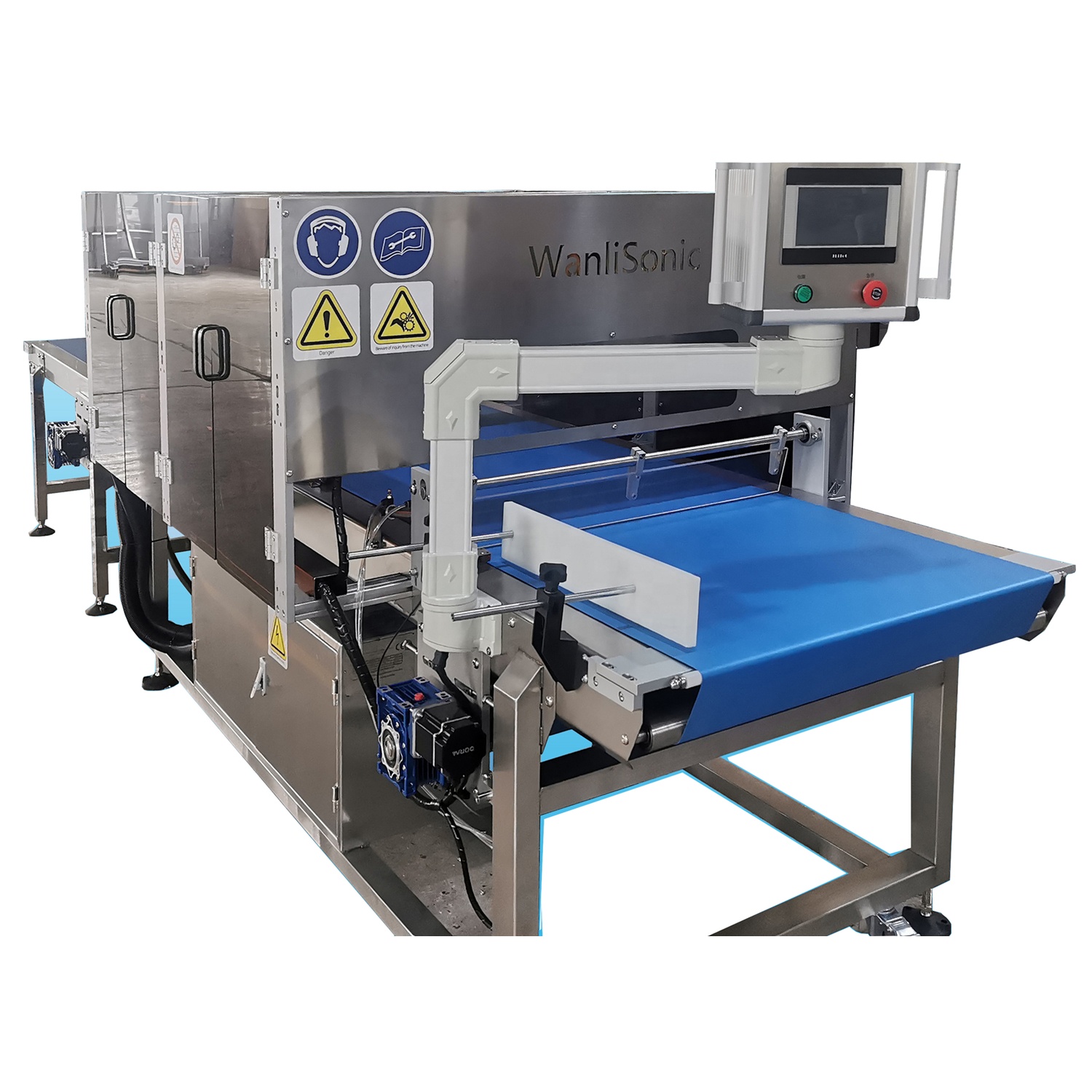
Reducing Labor Costs with Automated Bar and Sheet Bakery Portioning
Labor costs are a major consideration in commercial bakeries, especially when producing brownies, cereal bars, traybakes, nougat and other sheet-style bakery products. Beyond the actual cutting operation, workers must also measure portions, align products, clean cutting tools, separate finished pieces and inspect cut quality. These repetitive tasks can consume valuable production time and limit overall efficiency as order volumes increase.
Automated bar and sheet bakery portioning offers a practical way to streamline these operations. By integrating precise cutting technology with automated product handling, bakeries can reduce repetitive manual work, improve portion consistency and make better use of available labor. However, achieving meaningful cost savings requires a clear understanding of the existing workflow, product characteristics and actual production requirements.
Identify Labor-Intensive Tasks in the Current Cutting Process
Before investing in automated food cutting equipment, bakery operators should evaluate how labor is currently distributed across the portioning process. A typical workflow may include transferring cooled sheets to the cutting station, measuring dimensions, positioning products, cutting portions, separating pieces and preparing them for packaging.
Although manual cutting may appear straightforward, the supporting tasks can account for a substantial share of total labor time. Operators may need to repeatedly adjust product alignment, check portion sizes and correct irregular edges. When several recipes are processed on the same production line, additional time may also be required for cleaning and equipment adjustments.
A practical workflow assessment should record the number of employees involved, labor minutes per batch, cutting output, cleaning frequency, changeover duration and the amount of product requiring rework. Evaluating different product types, including sticky bars and fragile brownies, provides a more realistic picture of daily production demands.
By establishing a reliable baseline, bakeries can compare manual and automated portioning based on total operating requirements rather than cutting speed alone.
Hidden Labor Costs in Manual Bar and Sheet Cutting
Repeated Measuring and Product Alignment
Manual portioning often requires operators to measure products and position cutting guides before each batch. Small alignment errors can lead to inconsistent dimensions, uneven portions and additional inspection or rework.
These challenges become more noticeable when bakeries process multiple product sizes or switch frequently between recipes. Automated cutting systems with programmable cutting patterns can help reduce repetitive positioning tasks and support more consistent portion dimensions, provided that the product is positioned correctly and the machine is configured appropriately.
Cleaning and Handling Sticky Products
Products containing caramel, nougat, fruit fillings, chocolate or other sticky ingredients can create additional challenges during cutting. Residue may accumulate on blades and work surfaces, requiring operators to stop production for cleaning. Soft products may also deform during handling, increasing the need for inspection and corrective work.
Ultrasonic food cutting technology uses a high-frequency vibrating blade that can reduce resistance and material adhesion in certain applications. Its effectiveness depends on the product formulation, temperature, blade design and operating parameters. Representative product testing is therefore essential when evaluating whether ultrasonic cutting can reduce cleaning interruptions and improve production consistency.
Inconsistent Output and Production Bottlenecks
Manual cutting output can vary according to operator experience, fatigue, product geometry and the complexity of the cutting pattern. When the cutting station supplies downstream packaging operations, inconsistent throughput may create queues and reduce overall line efficiency.
Automated bakery portioning equipment can help standardize cutting sequences and coordinate output with other production operations. Nevertheless, actual performance depends on reliable product feeding, suitable machine settings, regular maintenance and effective operator training.
How Automated Ultrasonic Cutting Can Improve Portioning Efficiency
Automated ultrasonic food cutting equipment combines high-frequency blade vibration with controlled cutting movements to process suitable bakery and confectionery products. Depending on the machine configuration, it can support programmed cutting patterns, repeatable portion sizes and integration with conveyors or other product-handling equipment.
For brownies, sheet cakes, nougat bars and similar products, the technology may help reduce dragging, smearing and deformation compared with conventional cutting methods. Cleaner cut surfaces can also simplify subsequent inspection and handling in applications where product texture and formulation are compatible with ultrasonic cutting.
Automation can contribute to labor efficiency in several ways:
Reducing repetitive manual positioning: Programmable cutting patterns can limit the need for operators to measure and align every cutting line individually.
Improving portion consistency: Controlled cutting movements can support repeatable dimensions and reduce avoidable variation.
Streamlining production flow: Automated feeding and cutting can help coordinate processing with downstream packaging operations.
Reducing corrective work: More consistent cutting results may reduce the time spent sorting portions or correcting defects.
Supporting flexible production: Appropriate equipment configurations can accommodate different cutting patterns and portion sizes, subject to changeover requirements.
Wanlisonic provides ultrasonic food cutting solutions for food manufacturers seeking to improve cutting precision and production efficiency. The suitability of a particular system depends on the product range, required output, available floor space and level of automation needed.
Calculate the Total Cost of Automated Portioning
Reducing labor costs should be evaluated as part of a broader production improvement strategy. The purchase price of a machine alone does not determine its financial value. Bakery manufacturers should compare the total cost of their current manual process with the expected cost of the proposed automated workflow.
Important factors include:
Direct labor hours required for cutting, measuring and handling.
Time spent cleaning equipment and changing between recipes.
Product loss, rejected portions and rework.
Machine purchase, installation and integration costs.
Maintenance, replacement components and other consumables.
Employee training and routine inspection requirements.
Conveyor modifications, guarding and other production-line changes.
It is also important to distinguish between reducing headcount and reallocating labor. In some bakeries, automation may allow employees to spend more time on packaging, quality control or other value-added tasks instead of repetitive cutting. This can improve overall productivity even when the number of employees remains unchanged.
A realistic return-on-investment calculation should use the bakery's own operating costs and verified production-trial results rather than relying on generalized labor-saving claims.
Test Real Production Conditions Before Making a Decision
A sample cutting trial is one of the most effective ways to evaluate automated bar and sheet bakery portioning equipment. Before testing, manufacturers should define measurable performance targets that reflect both production efficiency and finished-product quality.
Recommended evaluation criteria include labor minutes per batch, acceptable portions per hour, dimensional or weight variation, cut-surface quality, product residue, waste levels and changeover time.
Product temperature and cooling time should also be recorded because they can significantly affect cutting performance. Testing should cover different formulations and textures, including firm brownies, soft cake sheets and sticky bars containing inclusions. Results from a single easy-to-cut product may not represent performance across the entire product range.
The trial should also consider how portions move into inspection, packaging and storage. A cutting machine that performs well in isolation may not deliver the expected labor benefits if it creates a bottleneck elsewhere in the production line.
By combining production data with practical sample testing, bakery operators can determine whether automated ultrasonic cutting offers a suitable and economically justified solution for their specific requirements.
Conclusion
Automated bar and sheet bakery portioning can help commercial bakeries address repetitive labor, inconsistent cutting results and avoidable production interruptions. By evaluating the entire workflow, selecting equipment suited to the product range and measuring performance under realistic conditions, manufacturers can make more informed automation decisions.
Wanlisonic offers ultrasonic food cutting solutions for food processing businesses looking to improve portioning accuracy and production efficiency. A product-specific assessment can help identify suitable cutting methods, automation options and potential opportunities to optimize labor utilization.
Frequently Asked Questions
1. Does automated bakery portioning always reduce labor costs?
Not necessarily. Automation can reduce repetitive cutting and handling tasks or allow employees to focus on other operations. The actual savings depend on production volume, machine configuration, staffing arrangements and the efficiency of the complete workflow.
2. Which products can be processed using automated ultrasonic cutting equipment?
Depending on the machine configuration and cutting requirements, suitable products may include brownies, sheet cakes, nougat bars, cereal bars, traybakes and other bakery or confectionery products. Sample testing is recommended to confirm suitability for each formulation.
3. Can ultrasonic cutting reduce residue when processing sticky bars?
Ultrasonic blade vibration may reduce sticking and dragging for certain sticky products. However, results depend on ingredients, product temperature, texture, blade design and operating settings. Testing with actual production samples is the best way to evaluate performance.
4. How can a bakery calculate the return on investment?
Compare current labor, cleaning, rework and waste costs with the expected operating costs of the automated process. Include equipment investment, installation, maintenance, training and changeover time. Use verified trial results to estimate the payback period.
5. What information is needed to select a suitable cutting machine?
Manufacturers should provide product dimensions, texture, temperature during cutting, required portion sizes, daily production volume, target throughput and current cutting methods. Information about product changeovers and downstream packaging requirements can also help determine the appropriate machine configuration.
6. Can automated cutting equipment integrate with an existing bakery production line?
Integration may be possible depending on the equipment configuration, conveyor layout, product transfer method, available space and required production speed. These factors should be reviewed before confirming a system design.
Contact Wanlisonic for Automated Food Cutting Solutions
If your bakery is looking to reduce repetitive portioning work, improve cutting consistency or evaluate automated ultrasonic food cutting equipment, contact Wanlisonic to discuss your production requirements and arrange a sample cutting test.
Share your product specifications, current cutting process and target production capacity to help identify a suitable cutting solution.
Contact Information:
Ruby Hong (Senior Customer Consultant)
Email: [email protected]
Tel / WhatsApp / WeChat: +86 15790657897
Table of Contents
- Reducing Labor Costs with Automated Bar and Sheet Bakery Portioning
- Identify Labor-Intensive Tasks in the Current Cutting Process
- Hidden Labor Costs in Manual Bar and Sheet Cutting
- How Automated Ultrasonic Cutting Can Improve Portioning Efficiency
- Calculate the Total Cost of Automated Portioning
- Test Real Production Conditions Before Making a Decision
- Conclusion
-
Frequently Asked Questions
- 1. Does automated bakery portioning always reduce labor costs?
- 2. Which products can be processed using automated ultrasonic cutting equipment?
- 3. Can ultrasonic cutting reduce residue when processing sticky bars?
- 4. How can a bakery calculate the return on investment?
- 5. What information is needed to select a suitable cutting machine?
- 6. Can automated cutting equipment integrate with an existing bakery production line?
- Contact Wanlisonic for Automated Food Cutting Solutions