
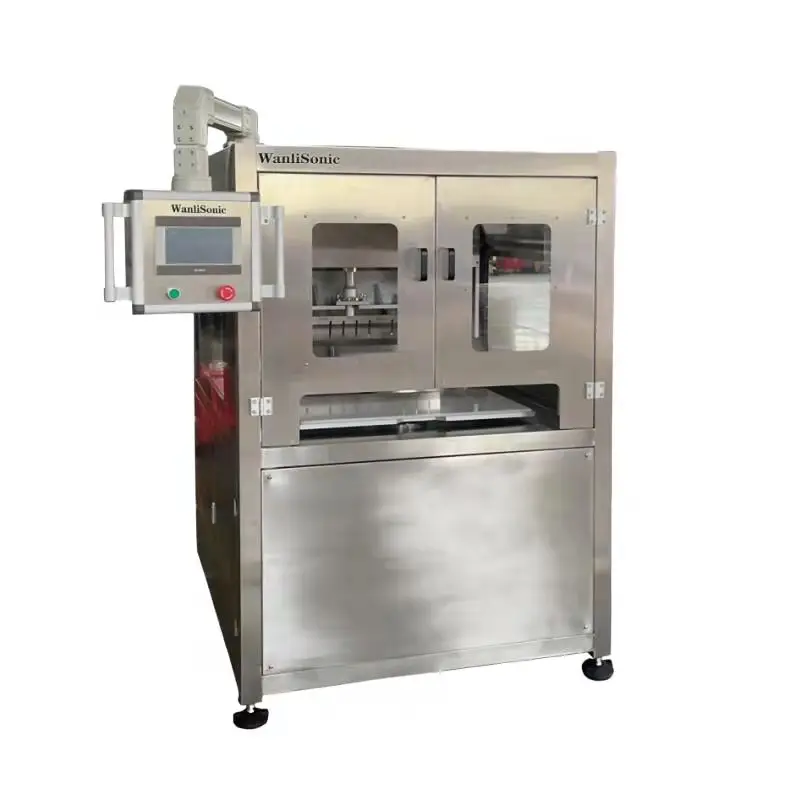
How to Choose an Automated Bar and Sheet Portioning Machine for Your Bakery
Selecting an automated bar and sheet portioning machine is an important step for bakeries seeking to improve production efficiency, portion consistency and product presentation. From brownies and traybakes to nougat, cereal bars and other sheet-style confectionery, different products require different cutting approaches. As labor costs increase, product ranges expand and order volumes grow, manual portioning can become a significant production bottleneck.
An automated portioning system can help streamline repetitive cutting tasks, reduce variation and support more standardized production. However, choosing the right equipment requires more than comparing machine models or advertised production speeds. Bakeries need to consider product characteristics, portioning requirements, production capacity, cleaning procedures and integration with existing equipment.
This guide explains the key factors to evaluate when choosing an automated bar and sheet portioning machine, helping bakery operators identify a suitable solution based on their actual production needs.
Understand Your Product Characteristics and Cutting Requirements
Before selecting a machine, evaluate the products it must process. Bars and sheet-style bakery products vary considerably in texture, firmness, stickiness, thickness and internal structure. These differences directly influence cutting performance and the type of equipment required.
Brownies, for example, may have a soft interior and delicate crust, while nougat and caramel-based bars can be sticky and difficult to separate cleanly. Cereal bars containing nuts, seeds or dried fruit may require a cutting process that maintains their structure without displacing inclusions. Layered desserts and filled bars introduce additional challenges because excessive pressure can distort their layers or cause filling to spread.
Product temperature and preparation conditions are equally important. Insufficient cooling may cause soft products to deform, while certain formulations become brittle or difficult to cut when excessively cold.
Before contacting an equipment supplier, document the following information:
Product dimensions: Record sheet length, width and thickness.
Target portion sizes: Define the required length, width, weight or cutting pattern.
Texture and composition: Identify sticky fillings, nuts, dried fruit, chocolate coatings and fragile layers.
Processing conditions: Specify product temperature, cooling time and surface characteristics.
Future production needs: Consider additional recipes, portion sizes and anticipated increases in output.
A clear understanding of these factors provides a practical foundation for evaluating machine compatibility and planning product cutting tests.
Identify the Limitations of Manual Portioning
Manual cutting can be suitable for small batches, specialty products and operations that frequently change recipes. However, as production requirements increase, several limitations may affect efficiency, consistency and operating costs.
Labor Requirements and Production Efficiency
Manual portioning involves repeated measuring, positioning, cutting, separating and handling. These tasks consume valuable operator time that could otherwise be allocated to baking, decorating, inspection and packaging.
Production speed may also vary according to operator experience, fatigue and product characteristics. Sticky bars or complicated cutting grids can require additional handling and blade cleaning, slowing the overall process.
An automated portioning machine can reduce repetitive manual work and make production planning more predictable. The actual labor savings depend on the machine configuration, loading and unloading arrangements, product variety and the level of automation throughout the line.
Portion Consistency and Product Appearance
Consistent portion dimensions are important for retail presentation, packaging specifications and customer expectations. Manual cutting can produce variations in spacing, cutting angles and piece size, particularly when processing large sheets or products with uneven surfaces.
These inconsistencies may result in irregular edges, compressed corners, crumbs or damaged inclusions. Portion weight can also vary because of differences in sheet thickness and ingredient distribution.
Automated positioning and programmed cutting patterns can help improve repeatability. Nevertheless, portion accuracy should be verified using representative samples, including pieces from the center, edges and corners of each sheet.
Product Waste and Rework
Waste can result from excessive trimming, broken portions, deformed products and residue left on cutting tools. Additional losses may occur when operators need to separate sticky pieces or correct inaccurate cuts.
Automation may help reduce avoidable handling damage and improve cutting consistency, but it cannot eliminate every source of waste. Product formulation, sheet preparation, cutting geometry and machine setup all influence the final result.
Bakeries should establish baseline measurements for rejected pieces, trimming losses, rework and usable product yield before investing in new equipment. These figures can later be compared with the results of machine trials to determine whether the proposed system delivers measurable improvements.
Evaluate Ultrasonic Cutting Technology for Bar and Sheet Products
Ultrasonic food cutting is one technology worth considering when processing soft, sticky or delicate bakery products. Unlike conventional cutting systems that rely primarily on mechanical pressure, ultrasonic equipment uses a blade vibrating at high frequency to change the interaction between the cutting edge and the product.
Depending on the food's composition and the operating conditions, this vibration can help reduce adhesion, dragging and deformation during cutting. It may be particularly useful for selected brownies, nougat, cereal bars, filled confectionery and other products that are difficult to portion consistently with conventional blades.
The cutting result depends on several variables, including:
Product firmness, temperature and formulation.
Blade geometry and vibration settings.
Cutting speed, direction and penetration.
Product thickness and the distribution of inclusions.
Cutting pattern, positioning accuracy and machine configuration.
Ultrasonic cutting should therefore be evaluated through actual product testing rather than treated as a universal solution for every recipe.
Depending on the equipment design, automated systems may support individual cuts, programmed grid patterns or integration with conveyors and product-handling equipment. For larger production operations, additional automation may coordinate feeding, positioning, cutting and discharge.
When evaluating a potential system from Wanlisonic, bakeries should assess the complete cut surface, including the top, sides, base and corners. Sticky residue, product separation, inclusion damage and portion consistency should all be included in the evaluation.
Choose a Machine That Matches Your Production Scale
The most suitable automated portioning machine depends on current production volume, product variety, staffing and the expected direction of business growth. A system designed for a small bakery may not provide the throughput or integration capabilities required by a large food manufacturing facility.
Small Bakeries and Product Development Kitchens
Small bakeries often prioritize flexibility, ease of operation and straightforward cleaning. Production may involve several recipes in limited quantities, making frequent product changeovers an important consideration.
When comparing equipment, consider how easily operators can load products, select cutting patterns, adjust portion dimensions and switch between recipes. A compact or semi-automatic system may be suitable when batch sizes are relatively small and product variety is high.
The ability to test new recipes and accommodate different sheet dimensions can also be valuable for businesses developing new products or expanding their offerings.
Growing Bakeries and Contract Manufacturers
Medium-scale bakeries typically need a balance between production efficiency and flexibility. As customer orders increase, consistent positioning, repeatable cutting patterns and manageable changeover times become increasingly important.
Evaluate whether the machine can accommodate different product dimensions without extensive mechanical adjustments. Recipe storage, accessible controls and practical cleaning procedures may also help reduce setup time between production runs.
Compatibility with upstream baking and cooling operations should be considered as well. Products need to reach the cutting station in a suitable condition, with consistent dimensions and sufficient structural stability.
Large-Scale Food Processing Facilities
High-volume manufacturers should evaluate the portioning machine as part of the entire production line rather than as an isolated piece of equipment.
Important considerations include feeding consistency, product alignment, cutting sequence, conveyor speed, discharge arrangements, inspection and downstream packaging. A high-capacity cutting machine cannot achieve its intended performance if products arrive irregularly or the packaging line cannot handle the output.
Manufacturers should request production trials using representative products and operating conditions. Verify actual throughput, changeover duration, operator involvement and cutting quality instead of relying exclusively on nominal machine capacity.
Key Features to Consider When Comparing Automated Portioning Machines
Beyond production capacity, several practical features can influence the long-term value of an automated bar and sheet portioning system.
Programmable Cutting Patterns
Different customers may require different portion dimensions, shapes or grid arrangements. Programmable settings can help operators repeat established cutting patterns and reduce the need for manual measurements.
Confirm whether the machine supports the required portion geometry and how easily cutting parameters can be adjusted for new products.
Positioning and Portion Accuracy
Reliable product positioning is essential for consistent cuts across an entire sheet. Ask how the machine aligns products, accommodates dimensional variation and maintains the intended cutting pattern.
Where portion weight is critical, evaluate weight distribution across multiple samples rather than assuming that uniform dimensions automatically guarantee uniform weights.
Cleaning and Maintenance
Bakery products may leave behind crumbs, chocolate, cream, caramel or other residues. Equipment should be designed to allow practical access to product-contact areas and routine cleaning.
Ask about blade removal, cleaning procedures, maintenance intervals and replacement components. Confirm the materials used in food-contact areas and the manufacturer's recommended sanitation practices for the intended application.
Automation and Production-Line Integration
Determine whether the machine will operate independently or connect to existing conveyors, cooling systems and packaging equipment.
For integrated production lines, confirm interface requirements, available floor space, product transfer arrangements and the expected level of operator involvement. These details can affect installation costs and overall production performance.
Technical Support and Application Testing
A supplier's ability to evaluate actual products is an important part of equipment selection. Product-specific testing can reveal limitations that may not be apparent from a machine specification sheet.
Before making a final decision, discuss sample availability, trial procedures, operating parameters, maintenance support and training arrangements with the supplier.
Conduct a Product-Specific Acceptance Test Before Purchasing
A structured acceptance test helps determine whether a machine meets the bakery's real production requirements. Rather than evaluating a single attractive sample, establish measurable criteria and test multiple products under realistic conditions.
The evaluation should include the following steps:
1. Define acceptance criteria. Specify acceptable portion dimensions or weight variation, edge quality, product deformation, residue, waste and production speed.
2. Prepare representative samples. Include common products as well as challenging recipes, such as sticky nougat, soft brownies or bars containing nuts and dried fruit.
3. Record processing conditions. Document product temperature, cooling time, sheet dimensions, thickness and relevant formulation differences.
4. Test the full cutting pattern. Examine pieces from the center, edges and corners. Check the top surface, sides and base for tearing, smearing, compression or uneven separation.
5. Measure operational performance. Record actual output, changeover time, cleaning requirements and the number of operator interventions.
6. Compare results with existing production. Assess whether the machine improves consistency, usable yield, labor efficiency and overall workflow under comparable conditions.
These steps help bakeries distinguish between theoretical machine capabilities and performance that can be demonstrated in their own production environment.
Frequently Asked Questions
Can one automated machine cut all types of bakery bars?
Not necessarily. Brownies, nougat, cereal bars and filled products have different textures, temperatures and structural characteristics. Machine compatibility depends on the cutting technology, blade configuration and product-handling requirements. Test each important product family before selecting the final configuration.
Is ultrasonic cutting suitable for sticky products such as nougat and caramel bars?
Ultrasonic cutting may help reduce blade adhesion and product deformation in certain sticky applications. However, results depend on the recipe, temperature, blade design and operating parameters. Product-specific trials are necessary to confirm suitability.
Does an automated portioning machine eliminate product waste?
No. Automation may reduce avoidable cutting errors, handling damage and rework, but some trimming and product loss may remain necessary. The actual improvement should be measured by comparing usable yield and rejected portions before and after installation.
How can I evaluate portioning accuracy?
Measure a representative selection of pieces from different positions across the sheet. Compare their dimensions and, where required, weights against your production specifications. Include center, edge and corner portions to identify variations across the entire cutting pattern.
What should a small bakery prioritize when choosing a machine?
Small bakeries should consider batch size, product variety, setup time, ease of operation, cleaning requirements and available workspace. Flexibility may be more valuable than maximum production speed when recipes change frequently.
How can a manufacturer determine the required machine capacity?
Estimate the number of sheets or products that must be processed per hour, then consider loading time, cutting cycles, product transfer, cleaning and changeovers. Confirm the required capacity through trials using representative products and the intended production workflow.
What information should I provide when requesting a quotation?
Provide product photographs or samples, sheet dimensions, thickness, target portion sizes, product temperature, expected output and details about the existing production line. Information about sticky surfaces, fragile layers, inclusions and current cutting problems will help the supplier assess the application more accurately.
Discuss Your Automated Portioning Requirements with Wanlisonic
Selecting an automated bar and sheet portioning machine is a process of matching product characteristics, cutting quality, production capacity and operational requirements. Careful evaluation can help bakeries identify equipment that supports more consistent portions, reduces repetitive manual work and fits their existing production workflow.
Wanlisonic works with food manufacturers seeking cutting solutions for bakery and confectionery applications. By sharing product samples, target portion dimensions, production volume and known cutting challenges, manufacturers can begin a more focused technical discussion and determine whether an automated or ultrasonic cutting system is suitable for their products.
Before making a purchasing decision, arrange product-specific cutting tests and confirm the expected results under realistic operating conditions.
Explore Wanlisonic food cutting solutions and discuss your bar and sheet portioning requirements with the team.
Contact Information:
Ruby Hong (Senior Customer Consultant)
Email: [email protected]
Tel / WhatsApp / WeChat: +86 15790657897
Table of Contents
- How to Choose an Automated Bar and Sheet Portioning Machine for Your Bakery
- Understand Your Product Characteristics and Cutting Requirements
- Identify the Limitations of Manual Portioning
- Evaluate Ultrasonic Cutting Technology for Bar and Sheet Products
- Choose a Machine That Matches Your Production Scale
- Key Features to Consider When Comparing Automated Portioning Machines
- Conduct a Product-Specific Acceptance Test Before Purchasing
-
Frequently Asked Questions
- Can one automated machine cut all types of bakery bars?
- Is ultrasonic cutting suitable for sticky products such as nougat and caramel bars?
- Does an automated portioning machine eliminate product waste?
- How can I evaluate portioning accuracy?
- What should a small bakery prioritize when choosing a machine?
- How can a manufacturer determine the required machine capacity?
- What information should I provide when requesting a quotation?
- Discuss Your Automated Portioning Requirements with Wanlisonic