
Reducing Sticking and Residue When Cutting Sticky Bakery Bars | Wanlisonic
Sticky bakery bars present persistent challenges in commercial food processing, particularly when cutting products containing caramel, nougat, fruit fillings, syrups, nuts, and other soft or adhesive ingredients. Traditional cutting methods can cause material buildup on blades, uneven edges, product deformation, and frequent production interruptions for cleaning. These issues affect portion consistency, processing efficiency, and finished-product quality.
To address these challenges, manufacturers can evaluate ultrasonic food cutting technology as part of a controlled production process. Wanlisonic provides ultrasonic food cutting solutions for bakery and confectionery applications, helping manufacturers explore suitable cutting methods for sticky products while maintaining consistent processing standards. The key is to understand the causes of adhesion, optimize cutting conditions, and evaluate performance throughout an entire production run rather than focusing on a few initial cuts.
Understanding the Causes of Sticking During Bakery Bar Cutting
Sticking is influenced by several interconnected factors, including ingredient formulation, moisture content, sugar concentration, fat composition, product temperature, and cooling time. Sticky bars cut before they have sufficiently stabilized may smear or deform under blade pressure. Conversely, products that are too firm may crack around nuts, dried fruit, or other inclusions.
Different layers within the same product can also respond differently to cutting. A soft caramel filling, a dense nougat center, and a firmer outer layer may require a balanced cutting approach to maintain the structure of the finished portion.
Blade condition is another important consideration. As residue accumulates during repeated cutting, the blade surface may become less effective at separating the product cleanly. Operators may compensate by applying additional pressure, adjusting cutting speed, or stopping more frequently to clean the equipment. These changes can introduce inconsistencies between portions and increase production downtime.
For this reason, manufacturers should establish consistent product conditions and inspect cutting performance throughout a representative production run before deciding which adjustments are necessary.
How Ultrasonic Cutting Can Help Reduce Adhesion
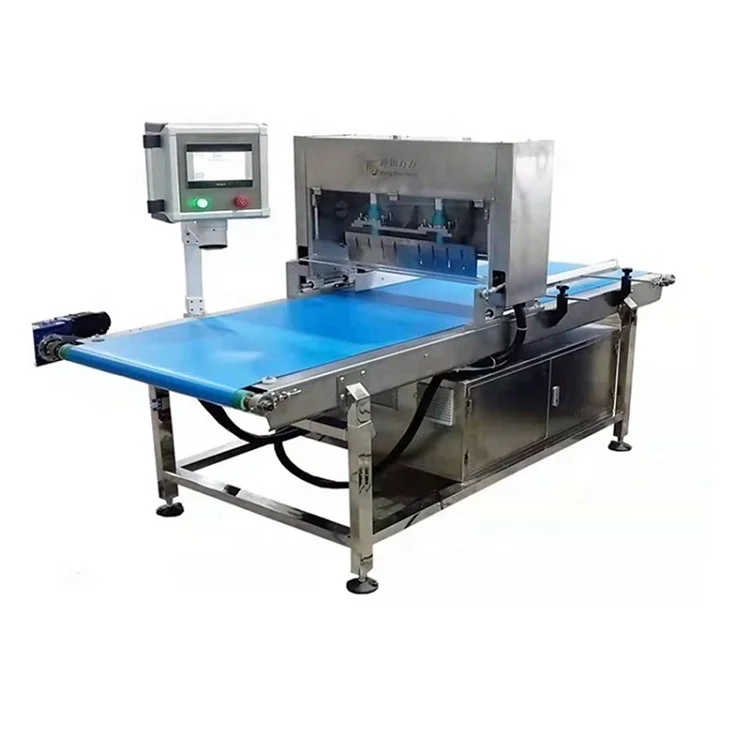
Ultrasonic food cutting technology uses a blade that vibrates at high frequency to separate suitable food products. Under appropriate operating conditions, this vibration can reduce dragging and help the blade pass through sticky materials with less resistance than conventional static cutting methods.
For bakery and confectionery manufacturers processing nougat bars, caramel-filled products, fruit-based bars, and other sticky sheet products, ultrasonic cutting may help improve edge definition and reduce product deformation. Depending on the formulation and machine configuration, it may also reduce residue accumulation and the frequency of blade cleaning.
However, ultrasonic cutting is not a universal solution for every sticky food. Results depend on the product's composition, temperature, thickness, inclusion distribution, blade design, cutting motion, and equipment settings. Some formulations may continue to produce residue and require regular cleaning.
Wanlisonic recommends evaluating ultrasonic food cutting equipment under realistic production conditions. A representative sample test can help manufacturers determine whether ultrasonic cutting offers measurable improvements in cut quality, residue control, and overall processing efficiency.
Establishing a Controlled Cutting Test for Sticky Products
A structured test provides a more reliable basis for evaluating cutting performance than a short demonstration. Manufacturers should compare samples under consistent conditions and record the results throughout the process.
1. Standardize Product Temperature and Conditioning
Before testing, document the product's cooling time, temperature, thickness, storage conditions, and handling procedure. Maintain consistent conditions across all samples to reduce variables that could influence cutting results.
For products containing caramel, nougat, syrups, or soft fillings, even small differences in temperature may affect adhesion, firmness, and deformation. Establishing a repeatable starting condition makes it easier to identify the effects of blade design and machine settings.
2. Inspect the Complete Cut Surface
The appearance of the top edge alone is not sufficient to determine cutting quality. Examine the top, sides, base, and corners of each portion for smearing, stringing, compressed edges, pulled inclusions, cracks, and incomplete separation.
Record whether the finished portions maintain their intended dimensions and shape after cutting, transfer, and packaging preparation. Photograph samples under consistent lighting and compare them against the bakery's established quality standards.
3. Measure Residue Buildup and Production Interruptions
Visual inspection should be supported by measurable production data. Record how frequently the blade requires cleaning, how much visible residue accumulates, the duration of cleaning stops, and whether cut quality deteriorates as the production run continues.
Where practical, compare these results with the bakery's existing cutting method. Use the same product batch and equivalent operating conditions to improve the reliability of the comparison.
Cleaning frequency should be determined by the manufacturer's instructions and applicable food-safety requirements. A reduction in visible residue does not justify extending cleaning intervals without appropriate validation.
4. Evaluate Performance Across the Entire Production Run
Residue may accumulate gradually, making the first few cuts an unreliable indicator of long-term performance. Inspect the blade at predetermined intervals and document when changes in cut quality begin to appear.
Include normal production stops and restarts where applicable. These conditions can reveal whether the equipment maintains consistent cutting performance after interruptions and whether residue affects the next production cycle.
For manufacturers processing multiple recipes, additional testing may be necessary to determine how different formulations influence blade buildup, product release, and cleaning requirements.
Integrating Cutting Performance With Sanitation and Maintenance
Reducing sticking is only one part of an effective food-cutting operation. Sticky ingredients can accumulate on blade holders, protective guards, product supports, conveyors, and nearby machine surfaces. Equipment selection should therefore consider sanitation access and maintenance requirements alongside cutting accuracy and throughput.
A suitable cutting system should support practical access to food-contact areas, straightforward inspection, and cleaning procedures consistent with the equipment manufacturer's guidance. Components that require cleaning should be accessible through the approved procedure without creating unnecessary maintenance difficulties or compromising operator safety.
Maintenance should include regular inspection of the blade, mounting components, and other wear parts specified by the supplier. If residue levels increase unexpectedly, operators should investigate possible causes such as recipe changes, temperature fluctuations, blade condition, or altered machine settings.
Recording these observations helps production teams identify recurring problems and avoid making multiple untracked adjustments. A documented process also makes it easier to maintain consistent results when changing products or production shifts.
For facilities handling products with different ingredients or allergen profiles, cleaning validation and allergen-control procedures must remain the primary requirements when determining production changeovers.
Choosing the Right Ultrasonic Food Cutting Solution
Selecting cutting equipment for sticky bakery bars requires an understanding of both the product and the production environment. Relevant considerations include product dimensions, texture, inclusion distribution, target portion sizes, required output, conveyor configuration, and cleaning procedures.
Manufacturers should also consider whether the equipment can accommodate different recipes without excessive changeover time. A cutting solution suitable for a relatively firm cereal bar may require different operating conditions from one used for soft nougat or caramel-filled confectionery.
Wanlisonic offers ultrasonic food cutting solutions for manufacturers seeking to improve portioning consistency and evaluate alternatives to conventional cutting methods. Discussing actual product samples, existing cutting problems, and production requirements can help establish whether an ultrasonic system is appropriate for a specific application.
A comprehensive evaluation should consider cut quality, residue accumulation, cleaning frequency, downtime, product loss, and finished-portion consistency together. This approach provides a more practical basis for equipment selection than relying on a single performance indicator.
Frequently Asked Questions
1. Can ultrasonic cutting eliminate sticking when processing bakery bars?
No. Ultrasonic cutting may reduce dragging and residue buildup for suitable products, but it cannot guarantee that sticking will disappear. Results depend on formulation, temperature, blade design, cutting parameters, and other production conditions. Sample testing is recommended.
2. Why do sticky bakery bars sometimes smear during cutting?
Smearing can result from excessive product temperature, insufficient cooling, high moisture or sugar content, blade residue, or unsuitable cutting parameters. Maintaining consistent product conditions and inspecting the blade can help identify the cause.
3. Which sticky products can be evaluated for ultrasonic cutting?
Potential applications include nougat bars, caramel-based confectionery, fruit paste bars, syrup-containing products, filled bakery bars, and other sticky sheet products. Suitability should be confirmed through product-specific testing.
4. How can manufacturers determine whether ultrasonic cutting reduces cleaning requirements?
Compare the existing cutting method and the ultrasonic system during representative production runs. Record visible residue, cleaning frequency, cleaning duration, downtime, and cut quality while maintaining the same hygiene requirements.
5. Does ultrasonic cutting require regular maintenance?
Yes. Ultrasonic cutting equipment still requires routine inspection, cleaning, and maintenance according to the manufacturer's instructions. Blade condition, mounting components, and specified wear parts should be checked regularly.
6. What information is needed to arrange a cutting test with Wanlisonic?
Manufacturers should provide the product type, approximate dimensions, ingredient or texture characteristics, product temperature during cutting, desired portion size, current cutting method, and the main problem to be addressed. Product samples, where available, can help support a more representative evaluation.
Arrange a Sticky-Product Cutting Test With Wanlisonic
For bakery and confectionery manufacturers, reducing sticking requires a combination of suitable cutting technology, consistent product conditioning, controlled operating parameters, and validated sanitation procedures.
Wanlisonic works with food manufacturers to evaluate ultrasonic food cutting applications for sticky bars, nougat, caramel-based products, and other challenging food materials. By testing actual products under realistic operating conditions, manufacturers can assess cut quality, residue buildup, production interruptions, and cleaning requirements before selecting an appropriate solution.
Contact Wanlisonic to discuss your sticky-product cutting challenges and explore an ultrasonic food cutting solution tailored to your production needs.
Explore Wanlisonic ultrasonic food cutting solutions and food cutting equipment.
Contact Information
Ruby Hong (Senior Customer Consultant)
Email: [email protected]
Tel / WhatsApp / WeChat: +86 15790657897
Table of Contents
- Reducing Sticking and Residue When Cutting Sticky Bakery Bars | Wanlisonic
- Understanding the Causes of Sticking During Bakery Bar Cutting
- How Ultrasonic Cutting Can Help Reduce Adhesion
- Establishing a Controlled Cutting Test for Sticky Products
- Integrating Cutting Performance With Sanitation and Maintenance
- Choosing the Right Ultrasonic Food Cutting Solution
-
Frequently Asked Questions
- 1. Can ultrasonic cutting eliminate sticking when processing bakery bars?
- 2. Why do sticky bakery bars sometimes smear during cutting?
- 3. Which sticky products can be evaluated for ultrasonic cutting?
- 4. How can manufacturers determine whether ultrasonic cutting reduces cleaning requirements?
- 5. Does ultrasonic cutting require regular maintenance?
- 6. What information is needed to arrange a cutting test with Wanlisonic?
- Arrange a Sticky-Product Cutting Test With Wanlisonic