
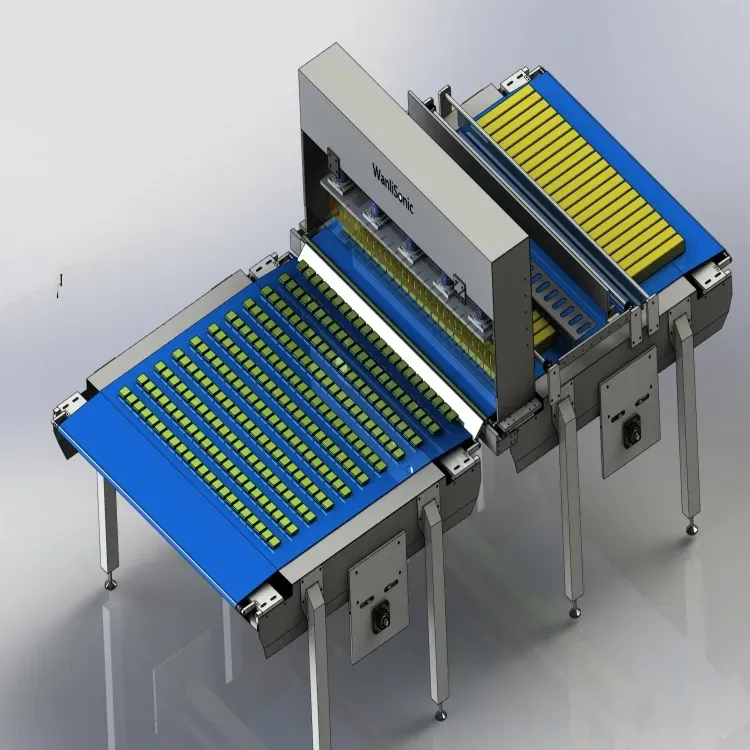
The commercial baking industry is experiencing a revolutionary transformation with the integration of advanced cutting technologies. Traditional pastry cutting methods, while reliable, often face challenges in maintaining consistent quality, reducing waste, and meeting the increasing demands of modern food production. An ultrasonic pastry cutting machine emerges as a game-changing solution that addresses these industry pain points through precision engineering and innovative technology. This cutting-edge equipment utilizes high-frequency vibrations to slice through delicate pastries, breads, and confectionery products with unprecedented accuracy and minimal product deformation.
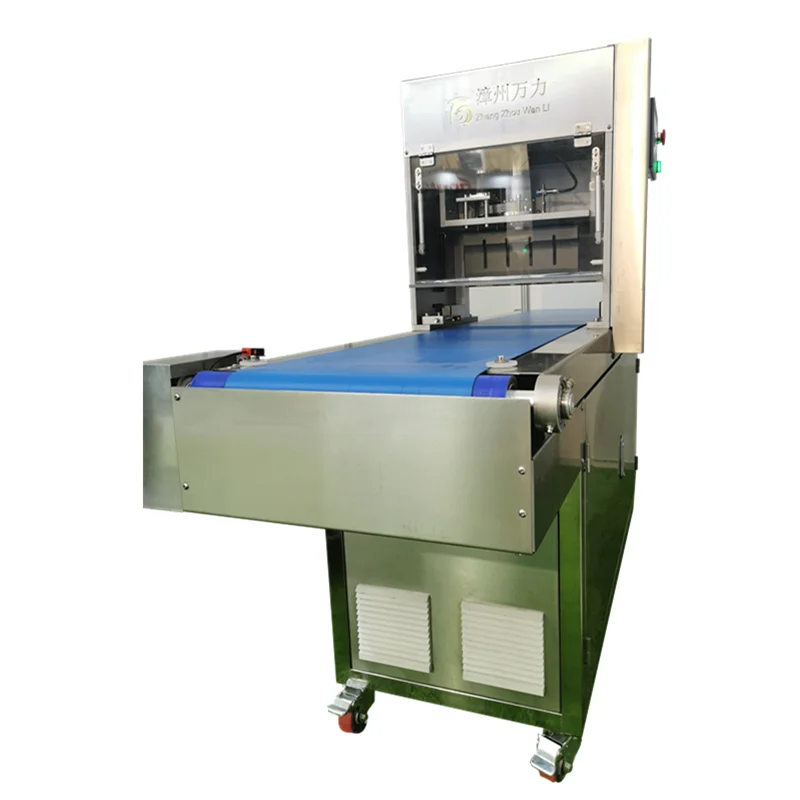
Revolutionary Technology Behind Ultrasonic Cutting Systems
Understanding Ultrasonic Vibration Mechanics
Ultrasonic cutting technology operates on the principle of high-frequency mechanical vibrations, typically ranging from 20,000 to 40,000 cycles per second. These rapid oscillations create a microscopic sawing action that enables the blade to slice through materials with minimal resistance. The ultrasonic pastry cutting machine leverages this technology to maintain the structural integrity of delicate baked goods while achieving clean, precise cuts that traditional mechanical methods often struggle to accomplish.
The vibration amplitude and frequency can be precisely controlled to accommodate different pastry densities and textures. This adaptability ensures optimal cutting performance across various product types, from flaky croissants to dense fruit cakes. The technology minimizes heat generation during the cutting process, preventing melting of chocolate coatings or cream fillings that commonly occur with conventional heated blades.
Advanced Control Systems and Automation Integration
Modern ultrasonic cutting systems incorporate sophisticated programmable logic controllers that enable precise parameter adjustment for different cutting applications. These control systems allow operators to fine-tune cutting speed, pressure, and vibration intensity based on specific product characteristics. The integration of servo motors and precision positioning systems ensures consistent cut placement and dimensional accuracy across large production runs.
Real-time monitoring capabilities provide immediate feedback on cutting performance, enabling proactive maintenance and quality assurance. Advanced systems feature touchscreen interfaces with recipe storage functionality, allowing operators to quickly switch between different product configurations while maintaining optimal cutting parameters for each specific application.
Operational Advantages in Commercial Pastry Production
Enhanced Product Quality and Consistency
The implementation of ultrasonic pastry cutting machine technology significantly improves product presentation and quality consistency. Unlike traditional mechanical cutting methods that can compress or tear delicate pastries, ultrasonic cutting maintains the original texture and appearance of baked goods. This preservation of product integrity is particularly crucial for premium bakery items where visual appeal directly impacts consumer purchasing decisions.
The precision cutting capability ensures uniform portion sizes, which is essential for both portion control and aesthetic presentation. This consistency translates to improved customer satisfaction and reduced product waste due to irregular cutting results. The clean cutting action eliminates the need for secondary finishing processes, streamlining production workflows and reducing labor costs.
Increased Production Efficiency and Throughput
Ultrasonic cutting systems offer significant improvements in production speed compared to manual cutting operations. The continuous cutting capability allows for higher throughput while maintaining consistent quality standards. The reduced cutting force requirements enable faster cutting speeds without compromising product integrity, particularly important for high-volume commercial operations.
The elimination of blade dulling issues associated with traditional cutting methods reduces downtime for blade replacement and maintenance. Ultrasonic blades maintain their cutting efficiency throughout extended production runs, contributing to overall equipment effectiveness and operational reliability. This consistency in performance enables more accurate production planning and delivery scheduling.
Economic Benefits and Return on Investment
Cost Reduction Through Waste Minimization
The precision cutting capabilities of ultrasonic pastry cutting machine systems dramatically reduce product waste generated during the cutting process. Traditional cutting methods often result in crumb generation, irregular portions, and product deformation that leads to quality downgrades or disposal. The clean cutting action of ultrasonic technology minimizes these waste streams, directly improving material utilization rates and reducing raw material costs.
The elimination of secondary processing steps, such as trimming irregular cuts or removing compressed edges, further reduces labor costs and processing time. These operational efficiencies compound over high-volume production cycles, generating substantial cost savings that contribute to rapid return on investment for commercial bakeries and food manufacturers.
Labor Optimization and Workplace Safety
Automated ultrasonic cutting systems reduce dependency on skilled manual labor for precision cutting operations. The consistent performance of these systems allows for task reassignment to higher-value activities while maintaining or improving cutting quality. The reduced physical demands associated with manual cutting operations contribute to improved workplace ergonomics and reduced injury risks.
The enclosed cutting environment and automated operation minimize direct operator contact with cutting blades, significantly enhancing workplace safety standards. This improved safety profile reduces insurance costs and compliance risks while creating a more attractive working environment for production staff.
Technical Specifications and Application Versatility
Adaptability Across Product Categories
The versatility of ultrasonic pastry cutting machine technology extends across numerous bakery product categories, from delicate laminated pastries to dense bread products. The adjustable cutting parameters accommodate varying product characteristics, including different moisture contents, textures, and structural compositions. This flexibility eliminates the need for multiple specialized cutting systems, reducing capital equipment requirements and simplifying production line configurations.
The technology proves particularly effective for products with multiple layers or components, such as filled pastries, layered cakes, and sandwich applications. The precise cutting action prevents layer separation or filling displacement that commonly occurs with conventional cutting methods, maintaining product integrity throughout the cutting process.
Integration with Existing Production Systems
Modern ultrasonic cutting systems are designed for seamless integration with existing conveyor systems and production lines. The compact footprint and modular design facilitate installation in space-constrained manufacturing environments without requiring extensive facility modifications. Standard communication protocols enable integration with plant-wide control systems for coordinated production management.
The compatibility with various product handling systems allows for continuous flow production configurations that maximize throughput efficiency. Quick-change tooling systems enable rapid product changeovers with minimal downtime, supporting flexible manufacturing strategies that respond to varying production demands and product mix requirements.
Future Innovations and Industry Trends
Smart Manufacturing Integration
The evolution of ultrasonic cutting technology continues with the integration of artificial intelligence and machine learning capabilities. These advanced systems can automatically adjust cutting parameters based on real-time product analysis, optimizing performance for varying ingredient compositions and environmental conditions. Predictive maintenance algorithms analyze vibration patterns and performance data to anticipate maintenance requirements before equipment failures occur.
Internet of Things connectivity enables remote monitoring and control capabilities, allowing production managers to oversee multiple cutting systems from centralized locations. This connectivity facilitates data collection for continuous process improvement and quality management initiatives, supporting the broader industry trend toward smart manufacturing systems.
Sustainability and Environmental Considerations
The environmental benefits of ultrasonic pastry cutting machine technology align with increasing industry focus on sustainable manufacturing practices. The reduced waste generation contributes to lower disposal costs and improved environmental performance metrics. The energy efficiency of ultrasonic systems, combined with reduced processing time requirements, results in lower overall energy consumption compared to traditional cutting methods.
The elimination of consumable blade replacements reduces material waste and disposal requirements associated with conventional cutting systems. The longer operational life of ultrasonic cutting components contributes to reduced lifecycle environmental impact while supporting corporate sustainability initiatives and environmental compliance requirements.
FAQ
What types of pastries can be effectively cut using ultrasonic technology?
Ultrasonic pastry cutting machines can effectively handle a wide range of bakery products including croissants, Danish pastries, filled donuts, layered cakes, bread loaves, and delicate confectionery items. The technology is particularly effective for products with multiple textures or components that would be damaged by traditional mechanical cutting methods. The adjustable parameters allow optimization for different product characteristics, making it suitable for both soft, delicate items and denser baked goods.
How does ultrasonic cutting compare to traditional blade cutting in terms of maintenance requirements?
Ultrasonic cutting systems typically require less frequent maintenance compared to traditional blade cutting systems. The ultrasonic blades do not dull in the same manner as conventional blades, eliminating the need for regular sharpening or replacement. Maintenance primarily involves periodic cleaning and inspection of the ultrasonic transducer and cutting horn. The reduced mechanical stress on cutting components results in longer operational life and lower overall maintenance costs.
Can ultrasonic cutting systems be integrated into existing production lines?
Yes, modern ultrasonic pastry cutting machines are specifically designed for easy integration into existing production lines. They feature standard conveyor interfaces and communication protocols that allow seamless connection with plant control systems. The modular design accommodates various installation configurations, and the compact footprint minimizes space requirements. Most systems can be installed with minimal disruption to ongoing production operations.
What is the typical return on investment period for ultrasonic cutting technology?
The return on investment for ultrasonic pastry cutting machine systems typically ranges from 12 to 24 months, depending on production volume and current operational efficiency. The primary cost benefits come from reduced product waste, improved production speed, lower labor requirements, and decreased maintenance costs. High-volume operations often see faster payback periods due to the compounding effects of operational improvements across large production quantities.
Table of Contents
- Revolutionary Technology Behind Ultrasonic Cutting Systems
- Operational Advantages in Commercial Pastry Production
- Economic Benefits and Return on Investment
- Technical Specifications and Application Versatility
- Future Innovations and Industry Trends
-
FAQ
- What types of pastries can be effectively cut using ultrasonic technology?
- How does ultrasonic cutting compare to traditional blade cutting in terms of maintenance requirements?
- Can ultrasonic cutting systems be integrated into existing production lines?
- What is the typical return on investment period for ultrasonic cutting technology?