
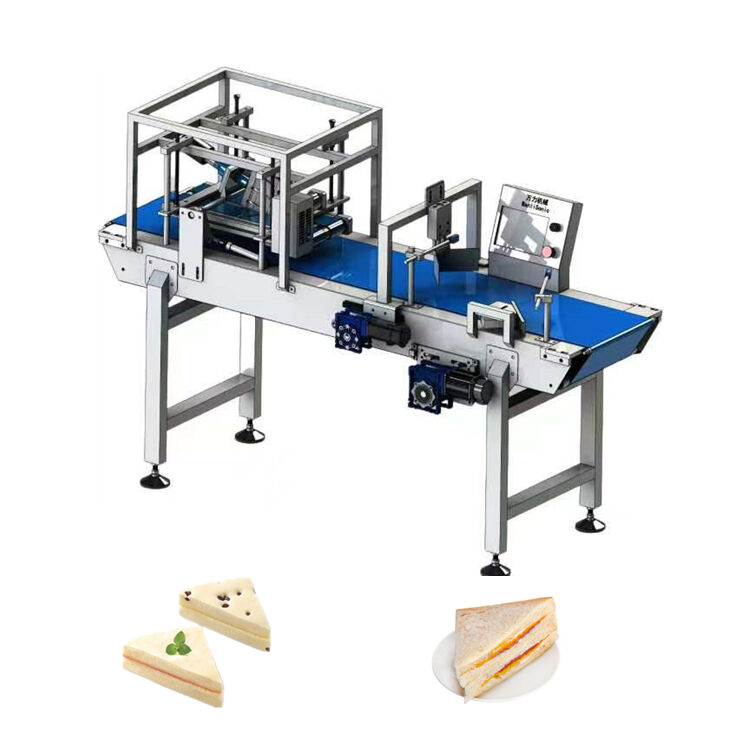
In today’s fast-moving food industry, sandwiches have become a staple product thanks to their convenience, versatility, and broad consumer appeal. From convenience stores and delivery services to airline catering and large-scale event supply, the demand for standardized, high-quality sandwiches continues to rise. To meet this demand, manufacturers are increasingly adopting ultrasonic cutting technology—an approach that significantly improves efficiency, consistency, and product quality.
Challenges with Traditional Cutting Methods
Conventional cutting tools—such as rotary blades, band saws, or mechanical presses—often struggle to meet the demands of sandwich production. These methods rely on physical force, which can compress soft bread and disturb delicate fillings.
Common issues include:
- Deformation of bread layers
- Filling displacement or smearing
- Adhesion of sauces and cheese to blades
- Generation of crumbs and debris
- Inconsistent portion sizes during continuous operation
Additionally, frequent cleaning is required due to residue buildup, and blade wear over time can lead to reduced cutting accuracy. These limitations not only affect product quality but also increase downtime and operational costs.
How Ultrasonic Cutting Technology Works
Ultrasonic cutting technology provides a highly effective alternative. It uses a piezoelectric system to convert electrical energy into high-frequency mechanical vibrations, typically in the range of 20 kHz to 40 kHz. These vibrations are transmitted to the cutting blade, which oscillates rapidly while moving through the product.
This process creates a low-resistance cutting environment, allowing the blade to pass through the sandwich smoothly rather than compressing it. The result is a clean, precise cut with minimal disruption to the structure of the sandwich.
Key Advantages of Ultrasonic Sandwich Cutting
1. Minimal Cutting Resistance
The vibrating blade significantly reduces friction, enabling it to slice through multiple layers effortlessly. Soft bread remains intact, and fillings retain their original placement.
2. Clean and Defined Edges
Ultrasonic cutting produces sharp, smooth edges without dragging or smearing ingredients. This is especially important for visually appealing, multi-layer sandwiches.
3. High Precision and Consistency
When integrated with automated positioning systems, ultrasonic cutters can achieve highly repeatable results. Each portion maintains consistent dimensions, supporting standardized packaging and pricing.
4. Reduced Waste and Higher Yield
Because the process avoids crushing and tearing, crumb generation is minimal. Material utilization can exceed 98%, reducing waste and improving profitability.
5. Self-Cleaning Effect
The high-frequency vibration helps prevent residue from sticking to the blade, reducing cleaning frequency and maintaining hygiene during continuous production.
6. Longer Blade Lifespan
Ultrasonic blades experience less mechanical stress compared to traditional knives, resulting in slower wear and lower maintenance requirements.
Integration into Automated Production Lines
In a typical production setup, the full-panel sandwich is transported via conveyor to the cutting station. Once positioned, the ultrasonic system performs a series of programmed cuts.
The entire process—from positioning to final cutting—can be completed within seconds. Afterward, robotic arms or automated systems transfer the individual sandwich portions to packaging lines for sealing or boxing.
For higher production demands, manufacturers can implement dual-blade systems or multi-station configurations, enabling continuous, high-speed operation without interruption.
Economic and Quality Benefits
Although ultrasonic cutting systems require a higher initial investment, the long-term benefits are substantial. Improved yield alone can reduce raw material loss by several percentage points, leading to significant cost savings in large-scale operations.
In addition, consistently clean and uniform products enhance brand image and allow for premium pricing. Reduced contamination risks and fewer product defects also lower quality control costs.
Furthermore, decreased maintenance needs and less downtime contribute to higher overall equipment efficiency, making ultrasonic cutting a cost-effective solution over time.
Future Trends in Ultrasonic Food Cutting
As the food industry moves toward greater automation and intelligence, ultrasonic cutting technology continues to evolve. Emerging innovations include:
- AI-based parameter optimization
- Vision systems for precise alignment
- Integration with automated weighing and inspection
- Adaptive cutting based on product texture and thickness
In the future, manufacturers may even achieve flexible cutting patterns within a single panel, allowing for customized portion sizes to meet diverse market needs.
About Wanlisonic
Wanlisonic specializes in advanced ultrasonic cutting solutions for the food processing industry. Since its establishment, the company has focused on developing high-performance equipment for cutting and portioning products such as cakes, sandwiches, cheese, and bakery items.
Wanlisonic offers a wide range of solutions, from compact standalone machines to fully automated inline systems designed for large-scale production.
With continuous technological advancement, Wanlisonic helps food manufacturers achieve precise, efficient, and hygienic production processes.
Conclusion
From sandwich blocks to perfectly portioned individual servings, ultrasonic cutting technology offers a reliable and efficient solution for modern food production challenges. Its ability to deliver clean cuts, maintain product integrity, and support high-speed automation makes it an essential component in industrial sandwich processing.
For manufacturers aiming to balance scale, quality, and efficiency, ultrasonic cutting technology represents a forward-looking investment that enhances both operational performance and consumer satisfaction.