
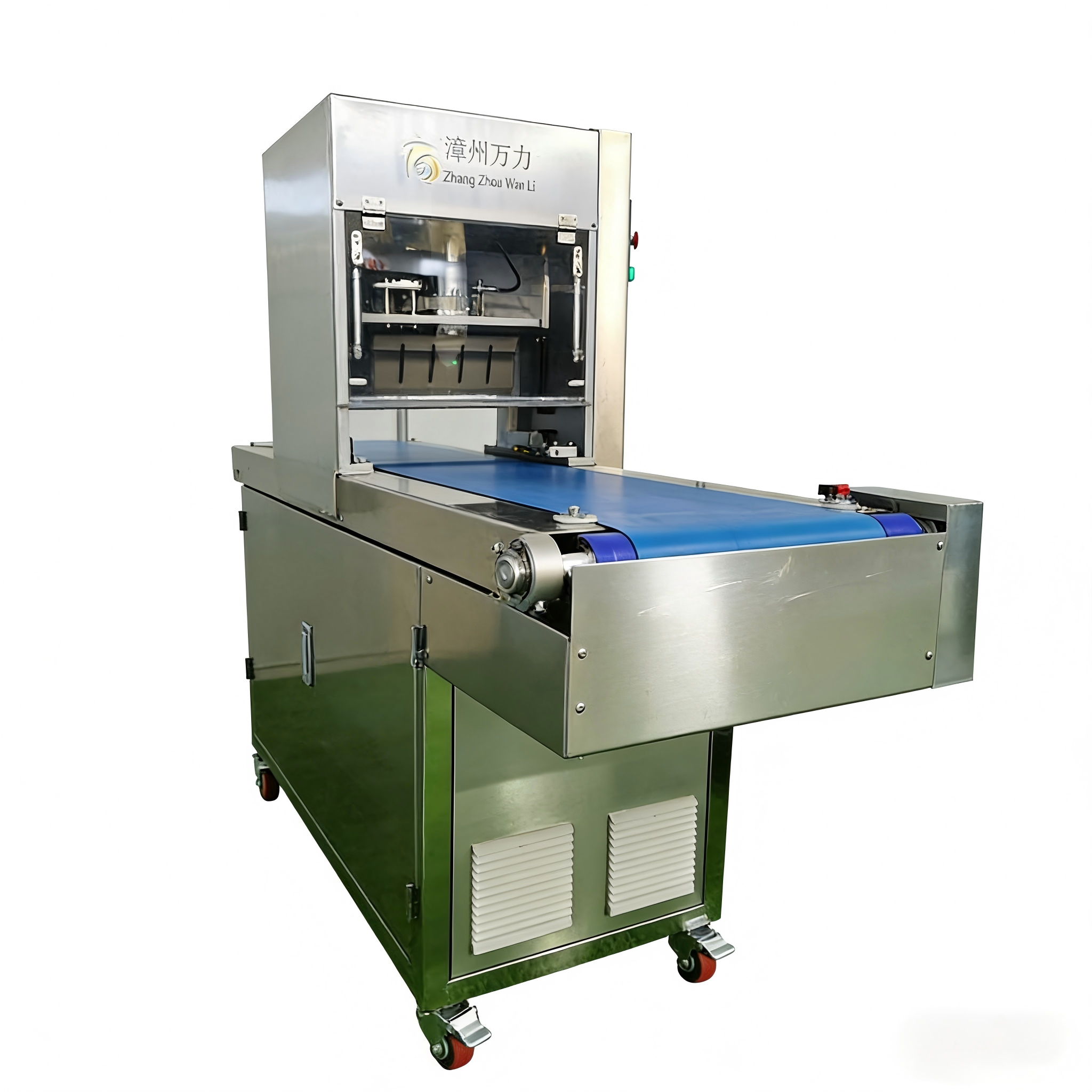
Achieving Cleaner Cut Surfaces on Brownies, Nougat and Sheet Bars with Ultrasonic Food Cutting Technology
In modern bakery and confectionery production, achieving clean, uniform cut surfaces is essential for product appearance, portion consistency and packaging quality. Brownies, nougat, caramel bars and other sheet-style sweet products often present cutting challenges due to their varying textures, sticky ingredients and delicate internal structures. Rough edges, excessive crumbs, surface smearing and compressed corners can affect the appearance of finished products and increase material waste.
Traditional cutting methods may struggle to deliver consistent results when processing products that are soft, sticky, brittle or contain nuts and other inclusions. To address these challenges, ultrasonic food cutting technology offers an alternative approach for suitable applications. By combining high-frequency blade vibration with appropriate product handling and process control, manufacturers can improve cutting consistency and optimize production efficiency.
Identify Cutting Defects Before Adjusting Equipment
Before selecting a cutting solution or changing machine settings, manufacturers should identify the specific defects affecting their products. Different ingredients and product structures respond differently to cutting forces, making it important to understand the underlying cause of each problem.
For brownies, a fragile crumb structure may cause particles to separate during cutting, leaving rough edges and excessive crumbs. Soft nougat can compress or stretch under conventional blade pressure, while sticky caramel layers may adhere to the blade and leave smeared surfaces. Products containing nuts, dried fruits or crispy inclusions may also experience ingredient displacement or uneven fracture.
Product condition is another important factor. Cutting brownies too soon after baking may result in a soft center that deforms under pressure. Nougat that is too warm may become excessively sticky, while products stored under different temperature conditions may develop inconsistent firmness.
Manufacturers should therefore evaluate product temperature, cooling time, recipe composition and structural stability before adjusting the cutting process. Establishing consistent preparation conditions makes it easier to determine whether a change in cutting technology or machine configuration can improve the finished result.
How Ultrasonic Cutting Technology Can Improve Cut Quality
An ultrasonic food cutting machine uses a blade that vibrates at high frequency, helping reduce resistance between the cutting tool and suitable food materials. Compared with conventional cutting methods, this technology can help minimize material adhesion, compression and deformation in applications involving soft, sticky or layered products.
For brownies, ultrasonic cutting may help preserve the internal crumb structure and produce more defined edges. When processing nougat and other sticky confectionery products, high-frequency blade vibration can help reduce drag and material buildup on the cutting surface. For sheet bars containing multiple layers or mixed ingredients, the technology may also support more controlled separation when the cutting parameters are properly matched to the product.
However, cutting performance depends on several factors, including blade design, vibration parameters, cutting speed, product temperature and ingredient distribution. Ultrasonic technology does not automatically guarantee a perfect cut for every recipe. Representative product testing is necessary to determine the most suitable configuration.
Quality evaluations should examine the complete cut surface, including the upper crust, interior, bottom layer and corners. Manufacturers should also check whether the product becomes compressed during blade entry or exit and whether toppings or inclusions move out of position. Samples taken from both the center and perimeter of a sheet can help reveal differences in cutting performance across the production area.
Maintain Stable Product Alignment and Support
Even when the cutting technology is appropriate, unstable product positioning can lead to inconsistent results. If a brownie sheet or nougat slab shifts during cutting, portions may vary in size and cut edges may become irregular.
A stable support surface helps maintain consistent blade engagement throughout the cutting process. Manufacturers should inspect trays, fixtures, product positioning systems and infeed alignment to ensure that the material remains properly supported. Uneven sheet thickness or a flexible base may cause the blade to encounter different resistance levels across the same product.
Cutting sequence and product transfer also deserve attention. When a large sheet is divided into individual portions, the first cuts may release sections that become unstable during subsequent cutting operations. Poor spacing or unsuitable outfeed handling can cause finished portions to collide, drag against one another or lose their clean edges.
For automated production lines, cutting quality should therefore be evaluated throughout the complete process, from product positioning and blade engagement to portion separation and downstream transfer. An integrated approach helps manufacturers identify whether defects originate from the cutting action or from product handling after cutting.
Establish a Repeatable Cut-Quality Inspection Process
A standardized inspection procedure allows production and quality teams to assess cutting performance objectively. Rather than relying solely on visual impressions, manufacturers can establish clear acceptance criteria for common defects.
A practical inspection should include the following factors:
Edge integrity: Check for tearing, rough edges, cracks and excessive crumbs.
Surface cleanliness: Inspect for smearing, sticky residue and material buildup.
Product shape: Identify compression, deformation and damaged corners.
Ingredient retention: Check whether nuts, dried fruits, toppings or other inclusions remain in their intended positions.
Dimensional accuracy: Measure portion length, width and thickness where required.
Process consistency: Compare samples taken from different positions across multiple sheets and production cycles.
Photographs and retained product samples can help establish a shared quality standard. Recording product temperature, cutting parameters, machine settings and cleaning intervals also makes it easier to identify the factors responsible for changes in performance.
Testing should include challenging recipes and repeated production runs. A single well-cut portion is not sufficient evidence of stable performance. When defects persist, manufacturers should change one process variable at a time whenever practical and verify whether the adjustment improves the targeted defect without introducing new problems.
Balance Cutting Precision with Production Efficiency
For commercial bakeries and confectionery manufacturers, cutting quality must be considered alongside overall operating requirements. A machine that delivers attractive cut surfaces should also support practical production needs, including throughput, cleaning, product changeovers and integration with downstream packaging equipment.
When evaluating an ultrasonic food cutting solution, manufacturers should consider the following operational factors:
Production capacity: Determine whether the equipment can meet the required output under actual product conditions.
Recipe flexibility: Assess its suitability for different brownie formulations, nougat textures, sheet bars and other confectionery products.
Changeover efficiency: Review the adjustments required when switching between product sizes or recipes.
Sanitation and maintenance: Check blade accessibility, cleaning procedures and the ease of maintaining food-contact components.
Line integration: Evaluate compatibility with existing conveyors, portioning systems and packaging operations.
Smaller bakeries may prioritize flexible equipment that accommodates multiple products, while large-scale manufacturers may place greater emphasis on repeatable portion dimensions, continuous operation and consistent output across multiple trays or sheets.
Selecting the right cutting solution requires matching machine capabilities to the actual product characteristics and production environment rather than relying on equipment specifications alone.
Check Cutting Consistency Across the Entire Sheet
Cut quality can vary between the first row and the last row of a sheet as product temperature, blade residue, positioning or support conditions change during production. Inspecting samples from several positions helps determine whether the cutting process remains stable throughout the complete sheet.
Manufacturers should also examine the portions after they have been transferred to the next production station. If the cut surfaces appear clean immediately after cutting but become damaged during handling, the problem may be related to product spacing, conveyor movement or outfeed configuration rather than blade settings.
A repeatable photographic inspection checklist enables production and quality teams to compare results consistently and agree on acceptable edge quality. By combining process monitoring with systematic product inspection, manufacturers can identify recurring defects and make better-informed adjustments to their cutting operations.
Explore Ultrasonic Food Cutting Solutions with Wanlisonic
For bakery and confectionery manufacturers seeking to improve cutting quality for brownies, nougat and sheet-style bars, ultrasonic food cutting technology may offer a practical solution for reducing certain cutting defects and achieving more consistent portioning.
Wanlisonic provides ultrasonic food cutting solutions for food processing applications. Manufacturers can evaluate suitable equipment configurations according to product texture, dimensions, cutting requirements and production targets.
To determine whether ultrasonic cutting is appropriate for a particular recipe, manufacturers are encouraged to prepare representative product samples and specify their main quality concerns, such as crumb formation, sticky residue, edge tearing, ingredient displacement or dimensional inconsistency. Sample cutting tests can help assess the achievable results and identify suitable process parameters before equipment selection.
By combining appropriate cutting technology, stable product support and a repeatable quality inspection process, food manufacturers can work toward cleaner cut surfaces, more consistent portions and improved production reliability.
Frequently Asked Questions (FAQ)
1. Why do brownie edges crumble during cutting?
Brownie edges may crumble because of the product's crumb structure, moisture content, cooling conditions, blade interaction or insufficient support. Evaluating these factors under consistent processing conditions can help identify the source of the problem.
2. Can ultrasonic cutting improve the appearance of nougat bars?
Ultrasonic cutting may help reduce blade drag, sticking and deformation when processing suitable nougat formulations. Actual performance depends on the recipe, product temperature, blade configuration and cutting parameters, so representative sample testing is recommended.
3. Is ultrasonic cutting suitable for sheet bars containing nuts or dried fruit?
It may be suitable for certain products containing nuts, dried fruits and other inclusions. The cutting method must be matched to the firmness and distribution of these ingredients to minimize displacement, breakage and uneven edges.
4. What should manufacturers inspect when evaluating cut quality?
Manufacturers should inspect the top surface, interior, base and corners for tearing, smearing, crumbs, deformation and residue. Portion dimensions, ingredient retention and the condition of products after transfer should also be checked where relevant.
5. Does ultrasonic cutting guarantee completely smooth cut surfaces?
No. Although ultrasonic vibration can help reduce cutting resistance and adhesion in suitable applications, the final result also depends on product formulation, temperature, blade geometry, cutting speed and handling conditions. Testing is necessary to establish realistic quality expectations.
6. How can manufacturers maintain consistent cutting results during mass production?
Manufacturers should standardize product preparation and temperature conditions, maintain stable alignment and support, monitor cutting parameters, inspect samples from different sheet positions and document process changes. Regular cleaning and suitable outfeed handling can also help maintain consistent results.
Contact Information
Ruby Hong (Senior Customer Consultant)
Email: [email protected]
Tel / WhatsApp / WeChat: +86 15790657897
Table of Contents
- Achieving Cleaner Cut Surfaces on Brownies, Nougat and Sheet Bars with Ultrasonic Food Cutting Technology
- Identify Cutting Defects Before Adjusting Equipment
- How Ultrasonic Cutting Technology Can Improve Cut Quality
- Maintain Stable Product Alignment and Support
- Establish a Repeatable Cut-Quality Inspection Process
- Balance Cutting Precision with Production Efficiency
- Check Cutting Consistency Across the Entire Sheet
- Explore Ultrasonic Food Cutting Solutions with Wanlisonic
- Frequently Asked Questions (FAQ)
- Contact Information