
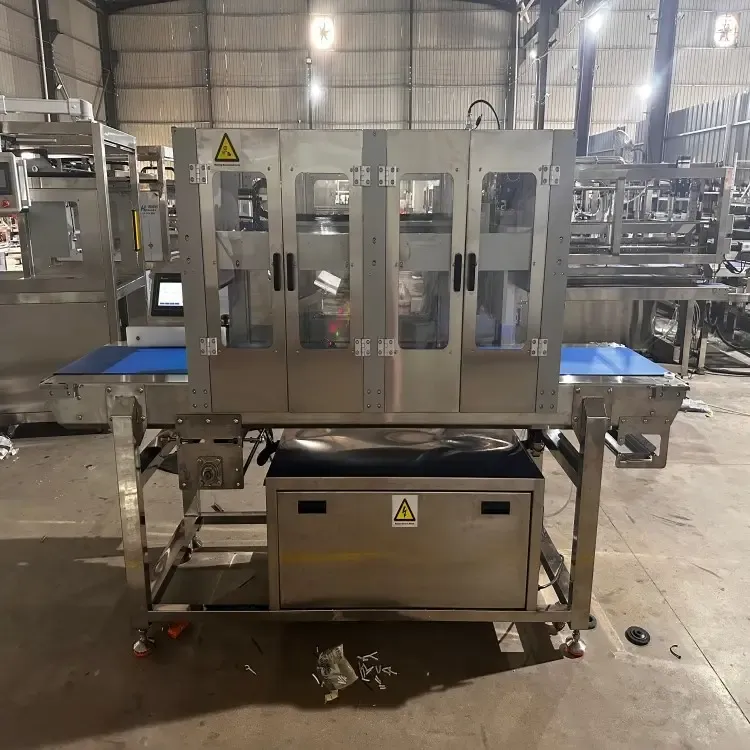
Food manufacturers worldwide face persistent challenges when processing sticky confectionery products, particularly nougat, which demands precision cutting while maintaining product integrity. Traditional cutting methods often result in compressed edges, uneven portions, and blade adhesion that compromises production efficiency. The innovative ultrasonic nougat cutting machine represents a revolutionary approach to addressing these manufacturing obstacles through advanced ultrasonic technology. This cutting-edge equipment utilizes high-frequency vibrations to slice through sticky materials without the traditional problems associated with conventional blade systems.
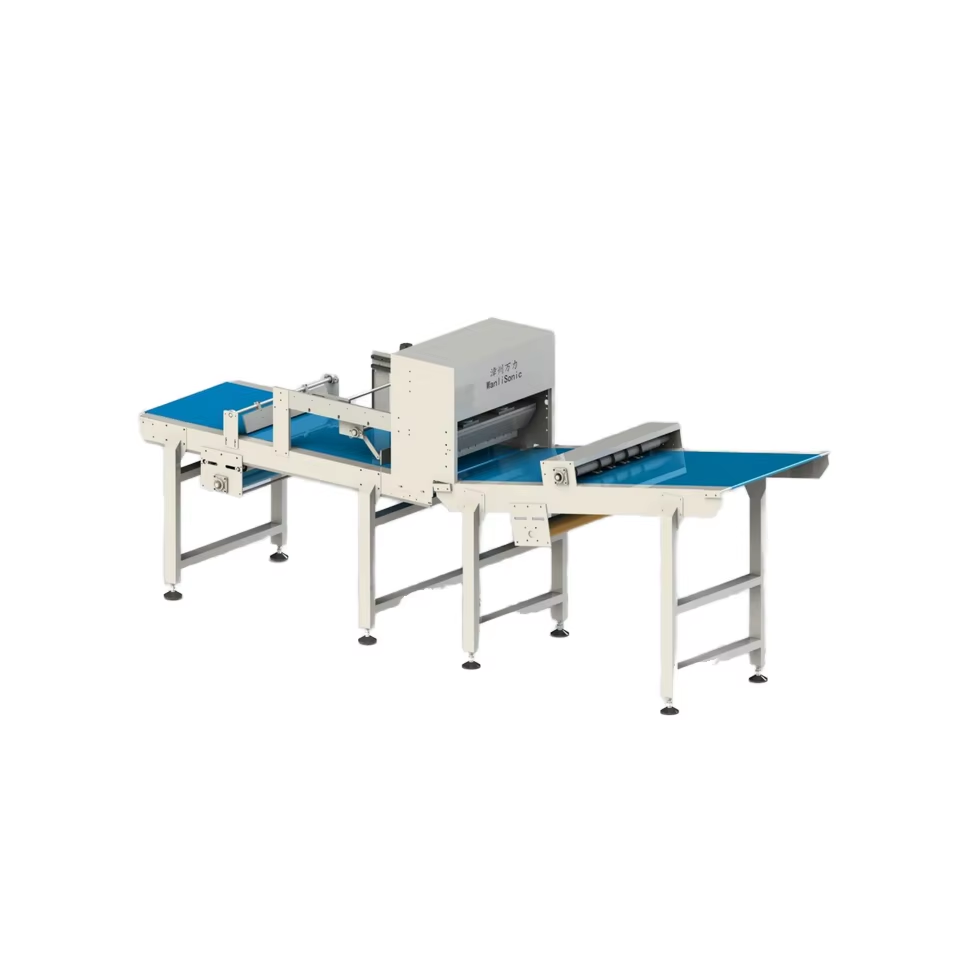
Understanding Ultrasonic Cutting Technology
Fundamental Principles of Ultrasonic Processing
Ultrasonic cutting technology operates on the principle of high-frequency vibrations transmitted through specialized cutting blades. These vibrations, typically ranging from 20 to 40 kHz, create microscopic movements that effectively reduce friction between the blade and the material being cut. The ultrasonic nougat cutting machine harnesses this technology to overcome the adhesive properties that make nougat notoriously difficult to process using traditional methods. The rapid oscillations prevent material buildup on cutting surfaces while maintaining clean, precise cuts throughout continuous operation.
The ultrasonic energy creates a cavitation effect at the cutting interface, temporarily reducing the material's resistance to separation. This phenomenon allows the blade to move through sticky substances with minimal force while preserving the structural integrity of delicate confectionery products. Modern ultrasonic systems incorporate sophisticated frequency modulation capabilities that can be adjusted based on specific material properties and cutting requirements.
Advantages Over Conventional Cutting Methods
Traditional mechanical cutting systems rely on shear force and sharp edges to separate materials, which often results in compression, deformation, and material waste when processing sticky products like nougat. Ultrasonic cutting eliminates these issues by using vibrational energy to facilitate clean separation without applying excessive pressure. The ultrasonic nougat cutting machine produces consistently uniform portions while minimizing product loss and maintaining aesthetic appeal.
Additionally, ultrasonic systems require significantly less maintenance compared to conventional equipment since the self-cleaning action of the vibrations prevents material accumulation on cutting surfaces. This characteristic translates to reduced downtime, lower cleaning costs, and improved overall equipment effectiveness in high-volume production environments.
Solving Sticky Nougat Processing Challenges
Addressing Blade Adhesion Issues
One of the most significant challenges in nougat processing is the tendency for sticky materials to adhere to cutting blades, causing irregular cuts and frequent production interruptions for cleaning. The ultrasonic nougat cutting machine eliminates this problem through continuous high-frequency vibrations that prevent material buildup on blade surfaces. The microscopic movements created by ultrasonic energy effectively repel sticky substances, maintaining clean cutting edges throughout extended production runs.
The anti-adhesion properties of ultrasonic cutting are particularly beneficial for nougat varieties containing honey, corn syrup, or other sticky binding agents. These ingredients typically cause severe blade fouling in conventional systems, requiring frequent stops for manual cleaning and blade maintenance. Ultrasonic technology maintains consistent cutting performance regardless of the nougat's sugar content or moisture level.
Maintaining Product Quality and Consistency
Product quality is paramount in confectionery manufacturing, where visual appearance and portion consistency directly impact consumer acceptance and brand reputation. The ultrasonic nougat cutting machine delivers superior cutting precision that preserves the delicate structure of nougat while creating clean, sealed edges that prevent moisture loss and contamination. This precision cutting capability ensures consistent portion weights and uniform appearance across entire production batches.
The gentle cutting action of ultrasonic technology is especially important for nougat products containing fragile ingredients such as nuts, dried fruits, or chocolate chips. Conventional cutting methods often crush or displace these inclusions, resulting in uneven distribution and compromised product appearance. Ultrasonic systems maintain the integrity of embedded ingredients while achieving precise dimensional accuracy.
Technical Specifications and Performance
Power Systems and Frequency Control
Modern ultrasonic nougat cutting machine designs incorporate advanced power management systems that provide precise control over vibration frequency and amplitude. These systems typically feature variable frequency drives that allow operators to optimize cutting parameters for different nougat formulations and production speeds. The ability to fine-tune ultrasonic parameters ensures optimal performance across a wide range of product characteristics and processing conditions.
High-quality ultrasonic generators provide consistent power output while monitoring system performance in real-time. Advanced models include automatic frequency tracking capabilities that maintain optimal resonance conditions as cutting loads vary throughout production cycles. This intelligent control system maximizes cutting efficiency while extending component life and reducing energy consumption.
Blade Design and Material Considerations
The effectiveness of an ultrasonic nougat cutting machine depends significantly on proper blade design and material selection. Ultrasonic cutting blades must be engineered to efficiently transmit vibrational energy while withstanding the stresses associated with continuous high-frequency operation. Titanium alloys and specialized steel compositions are commonly used for their excellent fatigue resistance and acoustic properties.
Blade geometry plays a crucial role in cutting performance, with factors such as blade thickness, edge angle, and surface finish affecting both cutting quality and energy transmission efficiency. Modern ultrasonic systems utilize computer-aided design techniques to optimize blade profiles for specific applications, ensuring maximum performance while minimizing power requirements and operational costs.
Production Efficiency and Cost Benefits
Throughput Optimization
The implementation of ultrasonic nougat cutting machine technology can significantly increase production throughput compared to traditional cutting methods. The elimination of blade cleaning interruptions and reduced cutting forces allow for higher processing speeds without compromising product quality. Many facilities report throughput increases of 20-40% when upgrading from conventional to ultrasonic cutting systems.
The consistent cutting performance of ultrasonic systems also reduces variability in production cycles, enabling more accurate planning and scheduling. This predictability is particularly valuable in high-volume operations where production delays can have cascading effects on downstream processes and delivery schedules.
Operational Cost Reduction
While the initial investment in an ultrasonic nougat cutting machine may be higher than conventional equipment, the long-term operational benefits typically result in favorable return on investment calculations. Reduced maintenance requirements, lower cleaning costs, and decreased material waste contribute to significant operational savings over the equipment's service life.
Energy efficiency is another important cost consideration, as ultrasonic systems often consume less power than conventional cutting equipment while delivering superior performance. The precise control capabilities of modern ultrasonic generators allow for optimization of power consumption based on actual cutting requirements, further reducing operational expenses.
Implementation and Integration Considerations
Facility Requirements and Installation
Successful implementation of ultrasonic nougat cutting machine technology requires careful consideration of facility requirements and integration with existing production lines. These systems typically require stable electrical power supplies and adequate ventilation to ensure optimal performance and component longevity. Proper installation by qualified technicians is essential to achieve the full benefits of ultrasonic cutting technology.
Integration with upstream and downstream processes should be planned carefully to maximize the efficiency gains possible with ultrasonic cutting. This may involve modifications to conveyor systems, product handling equipment, or packaging machinery to accommodate the improved cutting precision and throughput capabilities of ultrasonic systems.
Operator Training and Safety Considerations
Although ultrasonic cutting systems are generally safer than conventional equipment due to reduced cutting forces and improved operator protection features, proper training is essential for optimal performance and safety. Operators should understand the principles of ultrasonic cutting technology, proper equipment maintenance procedures, and appropriate safety protocols for working with high-frequency equipment.
Safety features commonly incorporated into modern ultrasonic nougat cutting machine designs include emergency stop systems, blade guards, and acoustic enclosures to minimize noise exposure. Regular safety training and equipment inspections ensure continued safe operation and compliance with applicable workplace safety regulations.
FAQ
How does ultrasonic cutting technology prevent nougat from sticking to blades?
Ultrasonic cutting technology uses high-frequency vibrations that create microscopic movements on the blade surface, preventing sticky materials from adhering. These vibrations, typically operating at 20-40 kHz, create a self-cleaning effect that continuously removes any material that might otherwise accumulate on conventional cutting blades. The cavitation effect generated by ultrasonic energy also reduces the material's adhesive properties at the cutting interface.
What maintenance requirements are associated with ultrasonic nougat cutting machines?
Ultrasonic cutting systems generally require less maintenance than conventional equipment due to their self-cleaning properties and reduced mechanical wear. Routine maintenance typically involves periodic inspection of ultrasonic transducers, verification of frequency calibration, and replacement of cutting blades based on usage hours rather than cleaning frequency. The absence of sticky material buildup significantly extends component life and reduces maintenance costs.
Can ultrasonic cutting systems handle different nougat formulations and consistencies?
Yes, modern ultrasonic nougat cutting machines feature adjustable frequency and amplitude controls that can be optimized for various nougat formulations, moisture contents, and consistency levels. The system parameters can be quickly adjusted to accommodate different products without requiring blade changes or extensive setup modifications. This flexibility makes ultrasonic systems particularly valuable for facilities producing multiple nougat varieties.
What are the typical payback periods for investing in ultrasonic cutting technology?
Payback periods for ultrasonic nougat cutting machine investments typically range from 12 to 24 months, depending on production volume, current efficiency levels, and specific operational conditions. The primary savings come from increased throughput, reduced waste, lower maintenance costs, and decreased labor requirements for blade cleaning and maintenance. High-volume operations often see shorter payback periods due to the compounding benefits of improved efficiency.
Table of Contents
- Understanding Ultrasonic Cutting Technology
- Solving Sticky Nougat Processing Challenges
- Technical Specifications and Performance
- Production Efficiency and Cost Benefits
- Implementation and Integration Considerations
-
FAQ
- How does ultrasonic cutting technology prevent nougat from sticking to blades?
- What maintenance requirements are associated with ultrasonic nougat cutting machines?
- Can ultrasonic cutting systems handle different nougat formulations and consistencies?
- What are the typical payback periods for investing in ultrasonic cutting technology?