
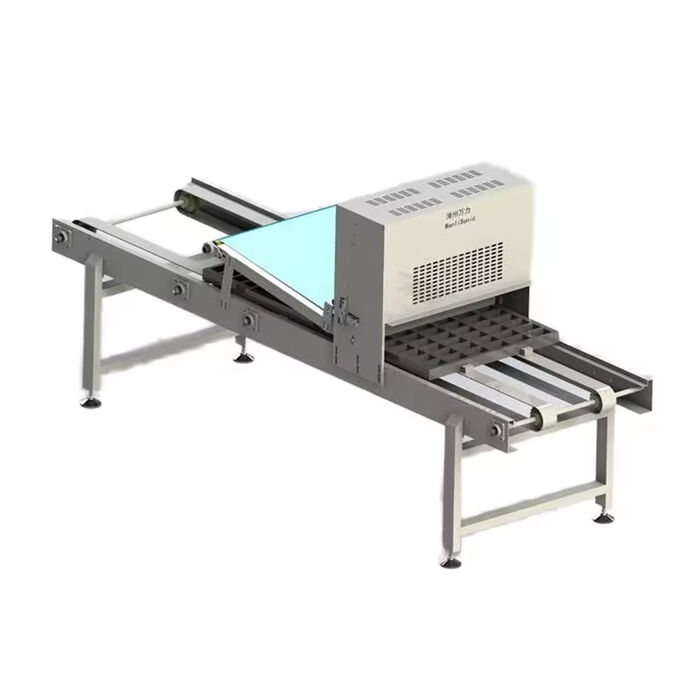
In the competitive world of modern baking, product quality, consistency, and efficiency are more important than ever. Whether producing delicate mousse cakes, soft bread, or layered pastries, achieving clean and uniform cuts remains a major challenge. Traditional cutting tools often fall short, leading to deformation, crumbs, and uneven portions.
So, what is the best cutting method for bakery products? The answer is increasingly clear: ultrasonic cutting technology. This advanced solution is transforming how bakeries handle soft, sticky, and fragile baked goods.
What Is Ultrasonic Cutting?
Ultrasonic cutting is a process that uses high-frequency vibrations—typically between 20–40 kHz—transmitted through a specially designed blade. These vibrations significantly reduce friction between the blade and the product.
Instead of relying on downward force, ultrasonic cutting introduces a micro-vibration that allows the blade to glide smoothly through bakery items. This results in precise cuts without crushing, tearing, or sticking.
Limitations of Traditional Cutting Methods
Bakery products vary widely in texture, from airy sponge cakes to dense brownies and sticky cream-filled pastries. Conventional cutting methods often struggle to handle these differences effectively.
Common challenges include:
- Compression and Deformation: Soft products lose their shape under pressure
- Excessive Crumbs: Bread and cakes often break apart during cutting
- Adhesion Issues: Cream, chocolate, and fillings stick to blades
- Inconsistent Portions: Manual cutting leads to uneven sizes
- Frequent Cleaning: Residue buildup requires constant maintenance
These issues can negatively impact product quality, increase waste, and reduce overall efficiency.
Why Ultrasonic Cutting Is Superior
1. Precision and Clean Edges
Ultrasonic blades produce smooth, sharp edges without damaging the internal structure of bakery products. This is particularly important for layered cakes and desserts where visual presentation is critical.
2. Reduced Product Adhesion
The high-frequency vibration minimizes sticking, allowing the blade to remain clean during operation. This improves hygiene and reduces downtime for cleaning.
3. Minimal Crumb Formation
Ultrasonic cutting reduces tearing and breakage, significantly lowering crumb generation. This helps maintain product integrity and ensures a cleaner production environment.
4. Consistent Portion Control
With programmable settings, ultrasonic cutting systems can deliver uniform slices or shapes. This ensures consistency in weight, size, and appearance—essential for packaging and branding.
5. Increased Efficiency
Ultrasonic cutting machines can operate continuously with minimal manual intervention. Faster cutting speeds and reduced maintenance lead to higher productivity.
Applications in Bakery Production
Ultrasonic cutting technology is highly versatile and suitable for a wide range of bakery products, including:
- Mousse cakes and cheesecakes
- Sponge cakes and layered desserts
- Bread and toast
- Brownies and dessert bars
- Pastries with cream, jam, or chocolate fillings
Its ability to handle both soft and sticky products makes it ideal for modern bakery operations.
How Ultrasonic Cutting Systems Work
An ultrasonic cutting system typically consists of several key components:
- Ultrasonic Generator: Produces high-frequency electrical signals
- Transducer: Converts electrical energy into mechanical vibrations
- Cutting Blade: Performs the cutting action with minimal resistance
Advanced systems may also include automated conveyors, programmable controls, and precision positioning systems to enhance performance.
Benefits for Industrial and Artisan Bakeries
Ultrasonic cutting is not limited to large-scale production. Both industrial manufacturers and artisan bakeries can benefit from this technology.
For industrial producers:
- High-speed, automated processing
- Reduced labor costs
- Improved consistency across large volumes
For artisan bakeries:
- Enhanced product presentation
- Greater control over portion sizes
- Ability to handle delicate, premium products
Future Trends in Bakery Cutting
As the food industry continues to evolve, ultrasonic cutting is expected to become the standard for bakery processing. Key trends include:
- Integration with smart manufacturing systems
- Increased automation and robotics
- Customizable cutting patterns for diverse products
- Improved energy efficiency and sustainability
These advancements will further enhance the role of ultrasonic technology in modern baking.
Conclusion
Ultrasonic cutting has proven to be the best method for cutting bakery products. By combining precision, efficiency, and cleanliness, it addresses the limitations of traditional cutting techniques.
Whether dealing with soft cakes, sticky pastries, or delicate layered desserts, ultrasonic cutting ensures consistent, high-quality results. For bakeries looking to improve production processes and product presentation, adopting ultrasonic cutting technology is a forward-thinking and highly effective solution.