
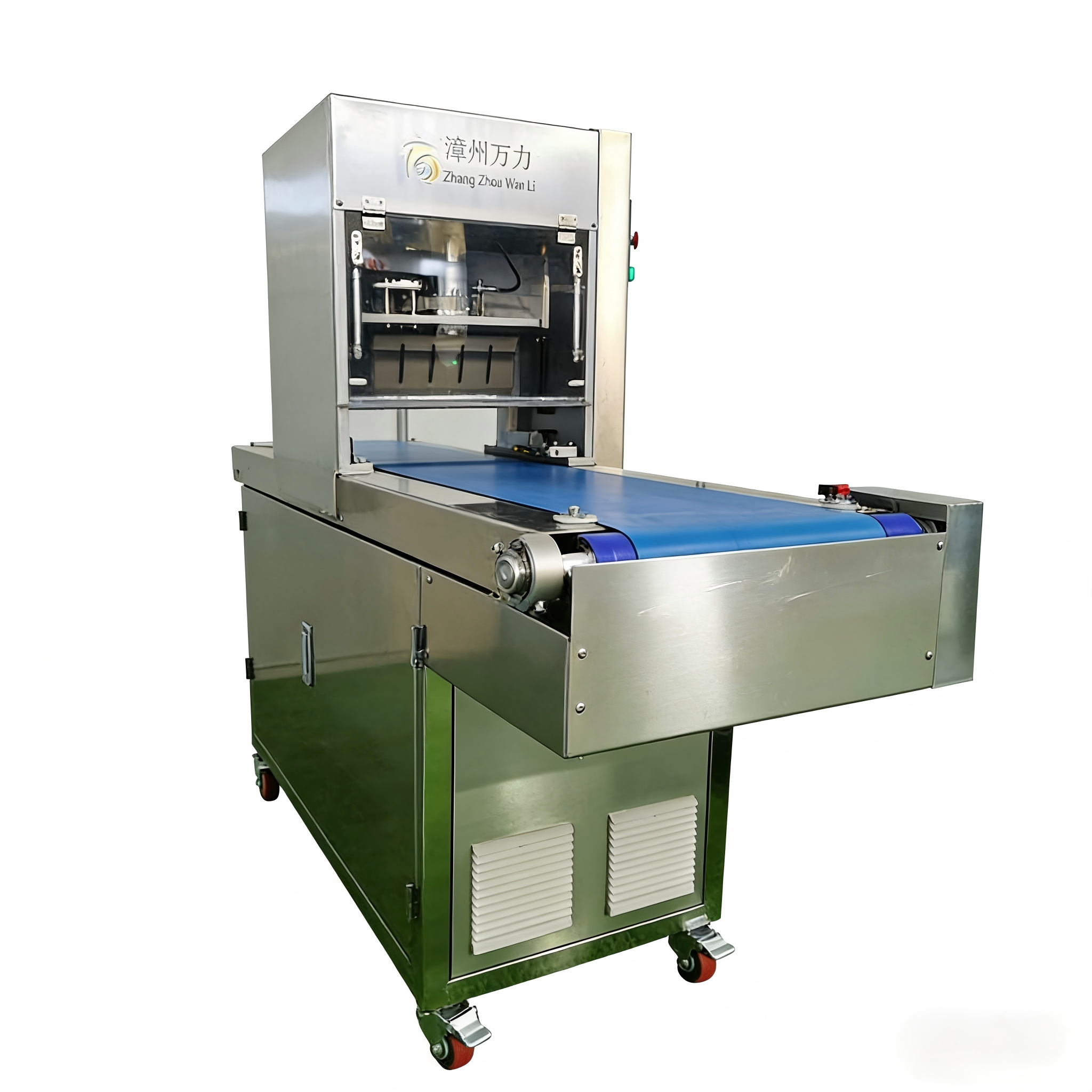
In today’s competitive food industry, cheese manufacturers are constantly seeking ways to improve productivity while maintaining consistent quality. Traditional cutting methods often lead to uneven portions, product deformation, and high material loss. To overcome these challenges, ultrasonic cheese cutting machines have emerged as a highly efficient and reliable solution.
Inspired by advanced industrial designs, this article explores how ultrasonic technology is redefining cheese cutting and why it is becoming a preferred choice for modern production lines.
What Is an Ultrasonic Cheese Cutting Machine?
An ultrasonic cheese cutting machine is a specialized food processing system that uses high-frequency vibration—typically between 20 kHz and 40 kHz—to assist cutting. Instead of relying solely on mechanical pressure, the blade vibrates at a microscopic amplitude, enabling it to slice through cheese with minimal resistance.
This technology allows manufacturers to cut cheese into precise weights and dimensions, whether for retail packaging or industrial distribution.
How Does Ultrasonic Cutting Technology Work?
The working principle of ultrasonic cutting is based on energy conversion and vibration transmission:
- An ultrasonic generator converts electrical energy into high-frequency signals
- A transducer transforms these signals into mechanical vibrations
- The vibrating blade transfers energy directly to the cheese
During cutting, a thin air layer forms between the blade and the product, reducing friction and preventing sticking. This ensures smooth, clean cuts without damaging the structure of the cheese.
Additionally, the slight heat generated at the cutting interface helps seal the surface, reducing moisture loss and improving product appearance.
Key Features of Ultrasonic Cheese Cutting Machines
1. High Precision Portioning
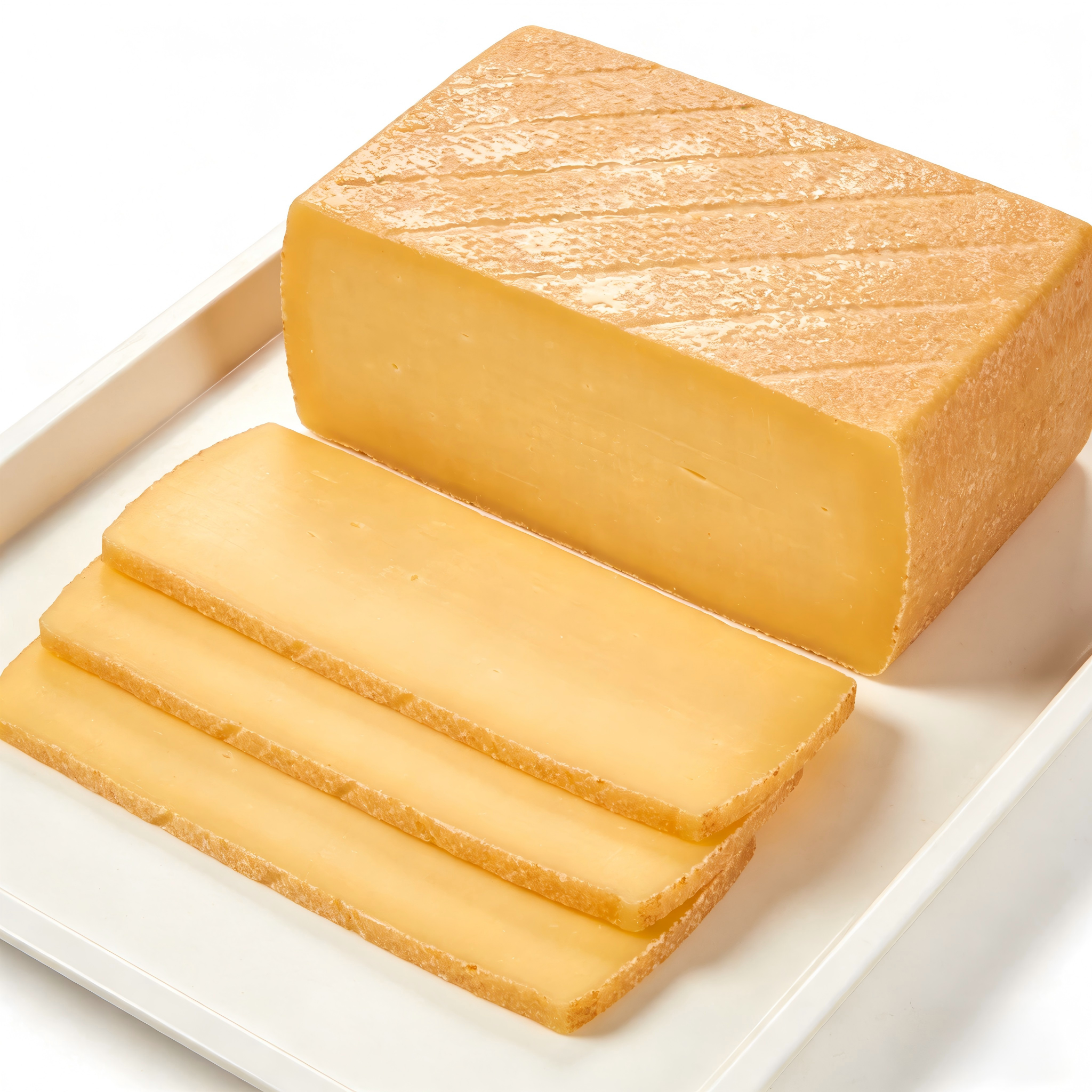
Ultrasonic machines can cut cheese into exact weight portions with minimal error. Some systems can process large blocks (e.g., 12 kg) into multiple standardized sizes automatically, ensuring uniformity across production batches.
2. Non-Stick Cutting Performance
One of the biggest challenges in cheese processing is blade adhesion. Ultrasonic vibration significantly reduces sticking, allowing continuous operation without frequent cleaning interruptions.
3. Smooth and Clean Cutting Surface
Unlike conventional knives, ultrasonic blades produce burr-free, neat edges. This enhances product appearance and eliminates the need for secondary trimming.
4. Reduced Waste and Higher Yield
Because the blade applies minimal pressure, it prevents crumbling and deformation. This leads to higher product yield and less material waste.
5. Automation and Intelligent Control
Modern machines are equipped with PLC systems and touchscreen interfaces, enabling operators to preset cutting parameters, store programs, and monitor production in real time.
6. Hygienic Food-Grade Design
All components in contact with food are typically made of stainless steel, ensuring compliance with food safety standards and easy cleaning.
Applications in the Cheese Industry
Ultrasonic cheese cutting machines are widely used in various sectors, including:
- Industrial cheese manufacturing plants
- Dairy processing facilities
- Ready-to-eat food production lines
- Supermarket and retail packaging systems
They are suitable for processing:
- Soft cheese (e.g., brie, mozzarella)
- Semi-hard cheese (e.g., gouda, edam)
- Hard cheese (e.g., parmesan)
- Processed or layered cheese products
Their versatility makes them ideal for both small-scale operations and large automated production lines.
Advantages Over Traditional Cutting Methods
| Feature | Traditional Cutting | Ultrasonic Cutting |
|---|---|---|
| Cutting Accuracy | Moderate | High |
| Product Deformation | Common | Minimal |
| Blade Sticking | Frequent | Rare |
| Waste Level | High | Low |
| Hygiene | Standard | Excellent |
| Automation | Limited | Advanced |
Ultrasonic cutting not only improves efficiency but also ensures consistent product quality, which is critical for brand reputation and customer satisfaction.
Why Choose Wanlisonic Ultrasonic Cheese Cutting Machines?
Wanlisonic focuses on delivering advanced ultrasonic cutting solutions tailored for modern food processing needs. Its cheese cutting machines are designed with:
- High-speed operation for continuous production
- Customizable cutting modes for different cheese types
- Precision control systems for consistent portioning
- Robust stainless steel construction for durability and hygiene
- Flexible integration into existing production lines
By combining innovation with practical functionality, Wanlisonic helps manufacturers achieve higher efficiency, lower waste, and superior product quality.
Future Trends in Ultrasonic Cheese Cutting
As automation and smart manufacturing continue to evolve, ultrasonic cutting technology is expected to advance further. Key trends include:
- Integration with robotic systems for fully automated production
- Energy-efficient ultrasonic generators
- Increased demand for customized portioning solutions
These developments will continue to drive the adoption of ultrasonic machines across the global food industry.
Conclusion
Ultrasonic cheese cutting machines represent a breakthrough in food processing technology. By delivering precise, clean, and efficient cutting, they address the key limitations of traditional methods. From reducing waste to enhancing hygiene, the advantages are clear.
For businesses aiming to improve production efficiency and maintain consistent product quality, ultrasonic cutting technology is no longer just an option—it is a necessity.
Table of Contents
- What Is an Ultrasonic Cheese Cutting Machine?
- How Does Ultrasonic Cutting Technology Work?
- Key Features of Ultrasonic Cheese Cutting Machines
- Applications in the Cheese Industry
- Advantages Over Traditional Cutting Methods
- Why Choose Wanlisonic Ultrasonic Cheese Cutting Machines?
- Future Trends in Ultrasonic Cheese Cutting
- Conclusion