
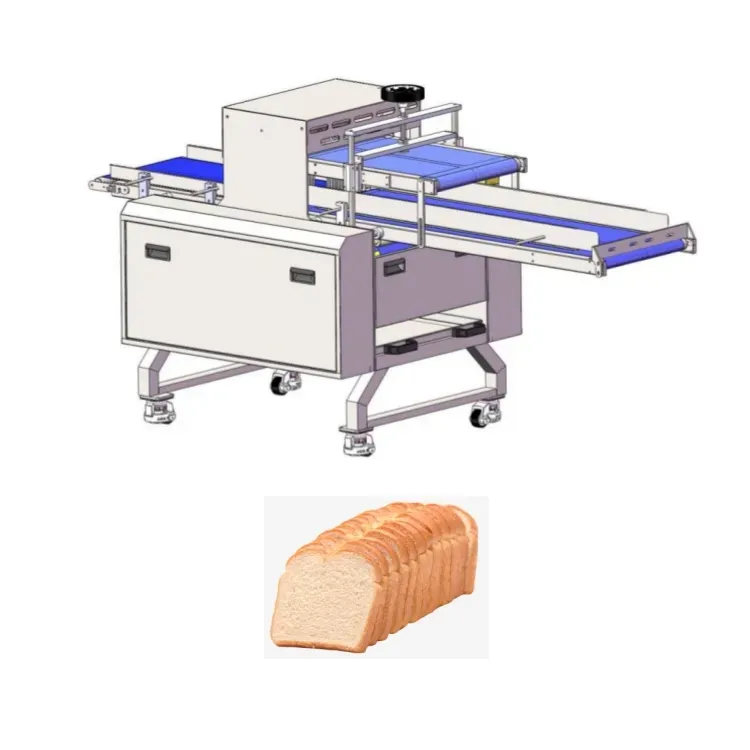
Modern bakery operations face increasing demands for consistent product quality and efficient production processes. Among the most critical aspects of bread manufacturing is achieving uniform slice thickness and presentation, which directly impacts customer satisfaction and operational profitability. Professional bread cutting equipment has become indispensable for commercial bakeries seeking to maintain competitive advantages while meeting stringent quality standards. The integration of automated slicing systems transforms traditional manual processes into streamlined operations that deliver measurable improvements in consistency, speed, and overall product quality.
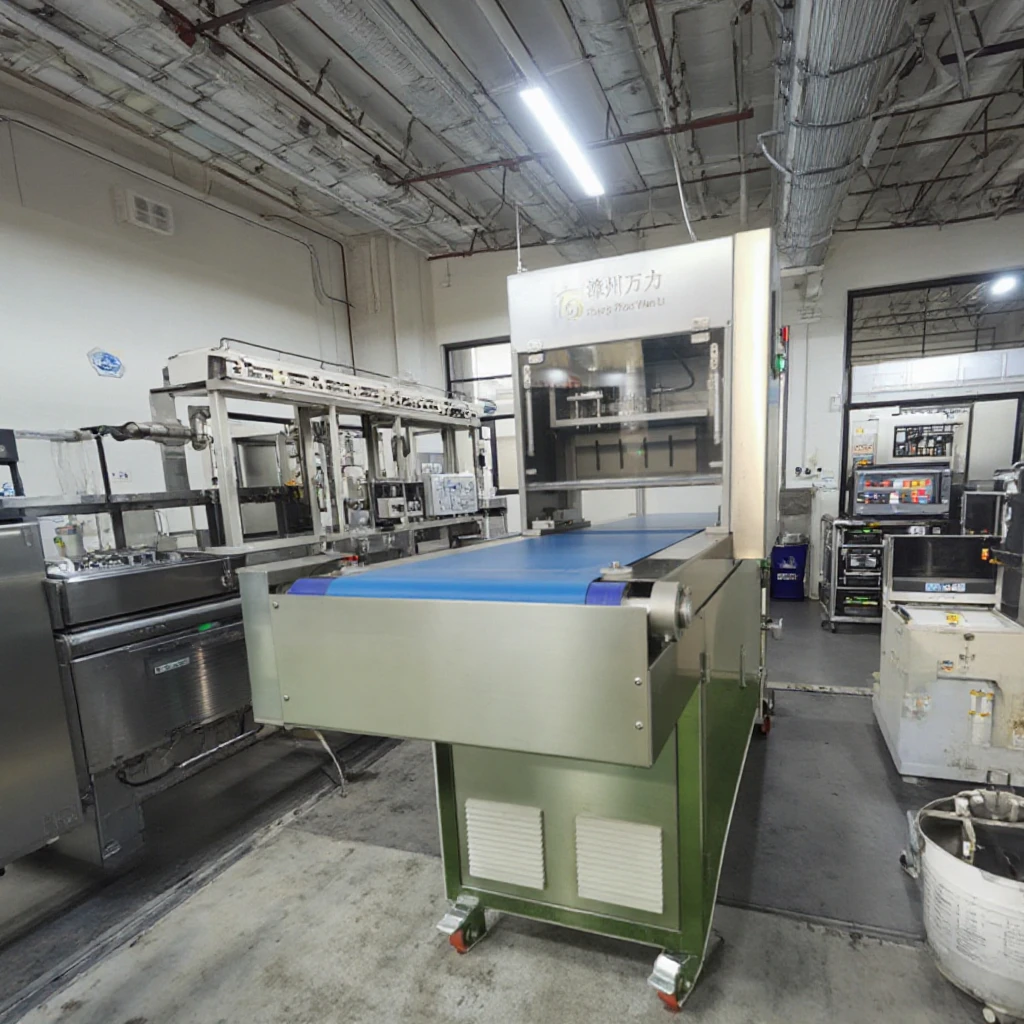
The evolution of bakery technology has revolutionized how commercial producers approach bread slicing operations. Traditional manual methods, while still prevalent in artisanal settings, cannot match the precision and efficiency that automated bread cutter systems provide. These sophisticated machines incorporate advanced engineering principles to deliver consistent results across thousands of loaves daily, ensuring that each slice meets predetermined specifications regardless of operator skill levels or production volume fluctuations.
Precision Engineering in Commercial Bread Cutting Systems
Advanced Blade Technology and Design
The foundation of any effective bread cutter lies in its blade system, which represents decades of metallurgical advancement and precision engineering. High-carbon stainless steel blades maintain their sharpness through extended production runs, while specialized coatings reduce friction and prevent product adhesion. The blade geometry itself is carefully calculated to minimize compression forces during cutting, preserving the internal structure of bread products and maintaining optimal texture characteristics.
Modern blade assemblies incorporate multiple cutting elements working in synchronized motion to achieve uniform slice thickness across the entire loaf width. This multi-blade approach eliminates the variations commonly associated with single-blade systems, where uneven pressure distribution can result in tapered or compressed slices. The precise spacing between blades is maintained through rigid mounting systems that resist deflection under operational loads, ensuring consistent performance throughout the production cycle.
Temperature control within the cutting chamber plays a crucial role in maintaining blade effectiveness and product quality. Advanced bread cutter designs incorporate thermal management systems that prevent excessive heat buildup, which can cause blade expansion and subsequent thickness variations. Some systems even feature temperature-controlled blade assemblies that maintain optimal cutting conditions regardless of ambient environmental factors or production intensity.
Automated Feed and Positioning Mechanisms
Consistent slice thickness depends heavily on precise loaf positioning and controlled feed rates through the cutting mechanism. Contemporary bread cutter systems employ sophisticated positioning technologies that automatically center each loaf and maintain optimal orientation throughout the cutting process. These systems utilize optical sensors and mechanical guides to ensure proper alignment before cutting begins, eliminating human error factors that commonly affect manual operations.
Variable speed drives allow operators to adjust cutting rates based on product characteristics and desired slice thickness. Dense whole grain breads require different feed rates compared to lighter white breads, and modern systems can store multiple cutting profiles for different product types. This flexibility ensures that each bread variety receives optimal treatment while maintaining the consistency standards that commercial operations demand.
The integration of servo-controlled positioning systems enables precise adjustment of slice thickness settings, often within tolerances measured in fractions of millimeters. This level of control allows bakeries to optimize portion sizes for specific packaging requirements or customer preferences while maintaining strict consistency standards across all production runs.
Quality Control Integration and Monitoring Systems
Real-Time Thickness Measurement
Advanced bread cutter installations incorporate sophisticated measurement systems that continuously monitor slice thickness during production operations. Laser-based measurement devices scan each slice as it exits the cutting chamber, providing immediate feedback on dimensional accuracy and identifying any deviations from established parameters. This real-time monitoring capability enables immediate corrective actions when variations are detected, preventing the production of non-conforming products.
Statistical process control integration allows production managers to track cutting performance trends over extended periods, identifying patterns that might indicate maintenance requirements or process optimization opportunities. These systems generate detailed reports showing thickness distribution patterns, machine utilization rates, and quality metrics that support continuous improvement initiatives within bakery operations.
Automated rejection systems work in conjunction with measurement devices to remove slices that fall outside acceptable tolerance ranges. This capability ensures that only products meeting quality standards proceed to packaging operations, protecting brand reputation and reducing customer complaints related to inconsistent slice dimensions.
Predictive Maintenance and Performance Optimization
Modern bread cutter systems incorporate predictive maintenance technologies that monitor critical component performance and predict potential failure points before they impact production quality. Vibration sensors, temperature monitors, and blade wear indicators provide continuous feedback on system health, enabling maintenance teams to schedule service activities during planned downtime rather than responding to unexpected failures.
Performance optimization algorithms analyze cutting patterns and automatically adjust operational parameters to maintain optimal slice consistency as blade sharpness gradually decreases over time. These systems can compensate for normal wear patterns by making microscopic adjustments to cutting speed, pressure, and positioning parameters, extending the effective service life of cutting components while maintaining quality standards.
Data logging capabilities create comprehensive maintenance histories that support evidence-based decision making regarding component replacement schedules and system upgrades. This information proves invaluable for optimizing maintenance costs while ensuring reliable production performance throughout the equipment lifecycle.
Production Efficiency and Economic Impact
Throughput Optimization and Labor Efficiency
The implementation of automated bread cutter systems delivers significant improvements in production throughput compared to manual slicing operations. Modern systems can process hundreds of loaves per hour while maintaining consistent slice quality, far exceeding the capabilities of manual operations. This increased capacity allows bakeries to meet growing demand without proportional increases in labor costs or facility space requirements.
Labor efficiency improvements extend beyond simple speed increases to include reduced physical strain on operators and elimination of repetitive motion injuries associated with manual slicing activities. Automated systems require minimal operator intervention once properly configured, allowing personnel to focus on higher-value activities such as quality monitoring, product development, and customer service functions.
The consistency achieved through automated bread cutter operations reduces product waste significantly by eliminating the thickness variations that often result in customer returns or downgrade to secondary markets. This waste reduction directly impacts profitability while supporting sustainability initiatives that increasingly influence consumer purchasing decisions.
Cost Analysis and Return on Investment
Investment analysis for bread cutter systems must consider both direct operational savings and indirect benefits related to quality consistency and market positioning. Direct savings include reduced labor costs, decreased product waste, and improved throughput rates that increase revenue potential. These quantifiable benefits typically justify equipment investments within reasonable payback periods for most commercial operations.
Indirect benefits often provide additional value that may not be immediately apparent in financial calculations. Consistent product quality enhances brand reputation and customer loyalty, potentially commanding premium pricing or increased market share. The ability to meet precise specifications also opens opportunities for private label contracts and institutional sales that require strict quality standards.
Energy efficiency considerations become increasingly important as utility costs rise and environmental regulations become more stringent. Modern bread cutter designs incorporate energy-saving features such as variable speed drives, efficient motor systems, and optimized cutting sequences that reduce overall power consumption compared to older equipment generations.
Integration with Production Line Systems
Upstream and Downstream Coordination
Effective bread cutter integration requires careful coordination with both upstream baking processes and downstream packaging operations. The timing of bread cooling, slice cutting, and packaging must be synchronized to maintain product freshness while achieving optimal production flow rates. Advanced control systems manage these interactions automatically, adjusting cutting schedules based on baking completion times and packaging line availability.
Communication protocols between different production line components enable seamless information sharing regarding product specifications, batch tracking, and quality parameters. This integration ensures that slice thickness settings automatically adjust when different bread varieties enter the cutting system, eliminating manual changeover procedures and reducing the potential for setup errors.
Buffer systems between cutting and packaging operations accommodate normal variations in processing rates while maintaining continuous production flow. These systems prevent bottlenecks that could force cutting operations to slow down or stop, maximizing overall line efficiency and equipment utilization rates.
Quality Assurance and Traceability
Comprehensive traceability systems track each loaf through the entire production process, including detailed records of cutting parameters, slice measurements, and quality control checkpoints. This information proves essential for investigating customer complaints, conducting product recalls when necessary, and demonstrating compliance with food safety regulations.
Barcode or RFID integration enables automatic identification of product batches as they enter the bread cutter system, ensuring that appropriate cutting parameters are applied based on product type and customer specifications. This automation eliminates manual data entry errors and ensures that quality records accurately reflect actual production conditions.
Quality management system integration allows bread cutter performance data to contribute to overall facility quality metrics and continuous improvement programs. Statistical analysis of cutting consistency data helps identify optimization opportunities and supports certification requirements for food safety and quality management standards.
Future Developments in Bread Cutting Technology
Artificial Intelligence and Machine Learning Applications
Emerging artificial intelligence technologies promise to revolutionize bread cutter operations through adaptive learning systems that continuously optimize cutting parameters based on product characteristics and quality outcomes. Machine learning algorithms can analyze thousands of cutting operations to identify subtle patterns that affect slice consistency, automatically adjusting system settings to maintain optimal performance.
Computer vision systems integrated with AI processing capabilities can evaluate bread texture, crust characteristics, and internal structure to determine optimal cutting approaches for each individual loaf. This level of personalized processing ensures that different bread varieties receive appropriate treatment while maintaining consistent final product quality across diverse product ranges.
Predictive analytics applications can forecast maintenance requirements, quality trends, and production optimization opportunities based on historical performance data and current operating conditions. These capabilities enable proactive management approaches that prevent quality issues before they impact production operations.
Sustainability and Environmental Considerations
Future bread cutter designs increasingly emphasize sustainability through reduced energy consumption, minimized waste generation, and extended equipment service life. Advanced materials and manufacturing techniques enable lighter, more durable equipment designs that require less energy to operate while delivering superior performance characteristics.
Waste reduction technologies focus on maximizing usable product yield through optimized cutting patterns and improved slice quality that reduces customer returns. Some systems incorporate crumb collection and processing capabilities that convert cutting waste into usable ingredients for other products, supporting circular economy principles within bakery operations.
Water conservation features and reduced cleaning chemical requirements contribute to environmental sustainability goals while decreasing operational costs. Self-cleaning capabilities and antimicrobial surface treatments reduce maintenance requirements and extend periods between thorough cleaning cycles without compromising food safety standards.
FAQ
What factors determine the optimal slice thickness for different bread types
Optimal slice thickness depends on several factors including bread density, intended use, customer preferences, and packaging requirements. Dense whole grain breads typically require thicker slices (12-15mm) to maintain structural integrity, while lighter white breads can be sliced thinner (8-10mm) without compromising quality. Sandwich breads generally use medium thickness settings (10-12mm) that balance structural strength with portion size considerations. bread cutter systems allow precise adjustment of these parameters to meet specific product requirements.
How do automated bread cutting systems maintain blade sharpness during extended production runs
Modern bread cutter systems maintain blade sharpness through several mechanisms including high-quality blade materials, optimized cutting angles, and automated maintenance features. Premium stainless steel alloys resist wear and maintain cutting edges longer than traditional materials. Some systems incorporate automatic blade conditioning cycles that remove buildup and maintain optimal cutting geometry. Predictive maintenance systems monitor blade performance and alert operators when replacement or maintenance is required, ensuring consistent cutting quality throughout production periods.
What safety features are typically integrated into commercial bread cutting equipment
Commercial bread cutter safety features include emergency stop systems, blade guards, operator presence sensors, and lockout/tagout capabilities for maintenance procedures. Light curtains and pressure-sensitive safety mats prevent operator access to cutting areas during operation. Blade exposure is minimized through enclosed cutting chambers with interlocked access doors. Safety training requirements and standard operating procedures ensure that personnel understand proper equipment operation and emergency response protocols for safe production environment maintenance.
How does bread cutter integration affect overall production line efficiency and flexibility
Integrated bread cutter systems significantly improve production line efficiency through automated changeover capabilities, reduced manual handling requirements, and optimized material flow rates. Communication with upstream and downstream equipment enables coordinated production scheduling that minimizes bottlenecks and maximizes equipment utilization. Flexible cutting parameter storage allows rapid switching between different product types without manual setup procedures, supporting diverse product portfolios within the same production facility while maintaining consistent quality standards across all varieties.
Table of Contents
- Precision Engineering in Commercial Bread Cutting Systems
- Quality Control Integration and Monitoring Systems
- Production Efficiency and Economic Impact
- Integration with Production Line Systems
- Future Developments in Bread Cutting Technology
-
FAQ
- What factors determine the optimal slice thickness for different bread types
- How do automated bread cutting systems maintain blade sharpness during extended production runs
- What safety features are typically integrated into commercial bread cutting equipment
- How does bread cutter integration affect overall production line efficiency and flexibility