
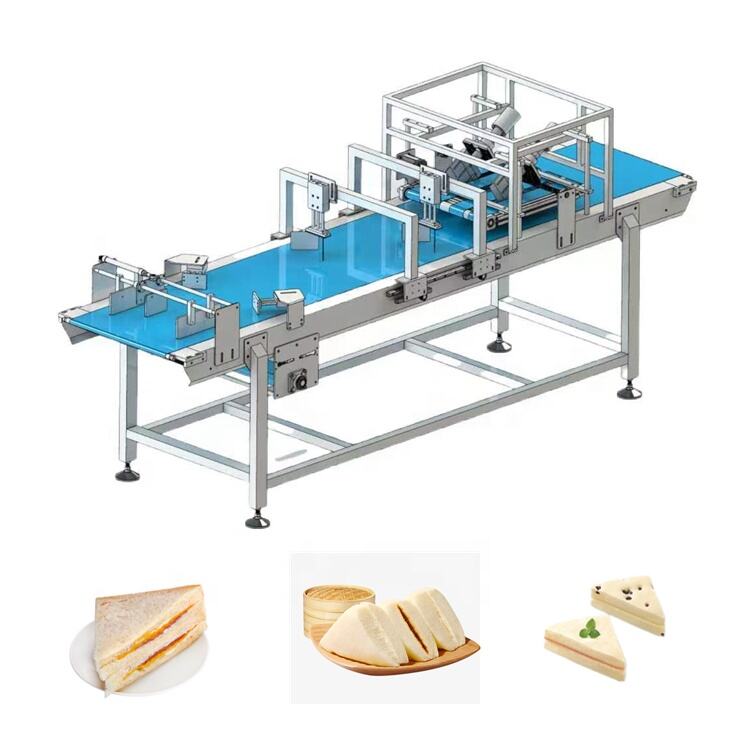
Food processing industries across the globe are experiencing unprecedented demands for precision, efficiency, and adaptability in their cutting operations. Modern production facilities require advanced solutions that can handle diverse product types while maintaining consistent quality standards. The emergence of ultrasonic cutting technology has revolutionized how manufacturers approach food processing, offering superior precision and reduced waste compared to traditional mechanical cutting methods. When businesses invest in a customized ultrasonic food cutting machine, they gain access to tailored solutions that address their specific production challenges while enhancing overall operational efficiency.
Understanding Ultrasonic Food Cutting Technology
Core Principles of Ultrasonic Cutting
Ultrasonic food cutting technology operates through high-frequency vibrations that create microscopic movements in the cutting blade. These vibrations, typically ranging from 20,000 to 40,000 Hz, generate minimal friction between the blade and food product, resulting in clean, precise cuts without crushing or deforming delicate materials. The technology excels particularly with sticky, soft, or layered food products that traditional cutting methods struggle to process effectively.
The ultrasonic waves create a cavitation effect that essentially eliminates the drag typically associated with conventional cutting. This phenomenon allows for smooth cutting through complex food matrices while preserving the structural integrity of products. The reduced friction also means less heat generation during the cutting process, which is crucial for maintaining food quality and preventing thermal damage to sensitive ingredients.
Advantages Over Traditional Cutting Methods
Traditional mechanical cutting often results in product deformation, uneven cuts, and significant waste generation. Ultrasonic cutting technology addresses these limitations by providing consistent cut quality regardless of product density or composition. The technology reduces product waste by up to 30% compared to conventional methods, making it an economically attractive solution for high-volume production facilities.
The precision achieved through ultrasonic cutting also enables manufacturers to create more intricate cuts and patterns that would be impossible with traditional blades. This capability opens new possibilities for product presentation and packaging optimization, allowing companies to differentiate their offerings in competitive markets.
Customization Options for Diverse Production Requirements
Blade Configuration and Design
One of the most significant advantages of choosing a customized ultrasonic food cutting machine lies in the ability to specify blade configurations that match exact production requirements. Manufacturers can select from various blade shapes, sizes, and materials depending on their specific food products. Flat blades work excellently for layered products like cakes and sandwiches, while curved blades are optimal for round products such as pizzas and pies.
The blade material selection is equally important, with options ranging from stainless steel for general applications to specialized titanium alloys for highly acidic products. Surface treatments and coatings can be applied to prevent product adhesion and extend blade life. The customization process also includes determining the optimal blade thickness and edge geometry to achieve desired cutting characteristics for specific food matrices.
Control Systems and User Interface
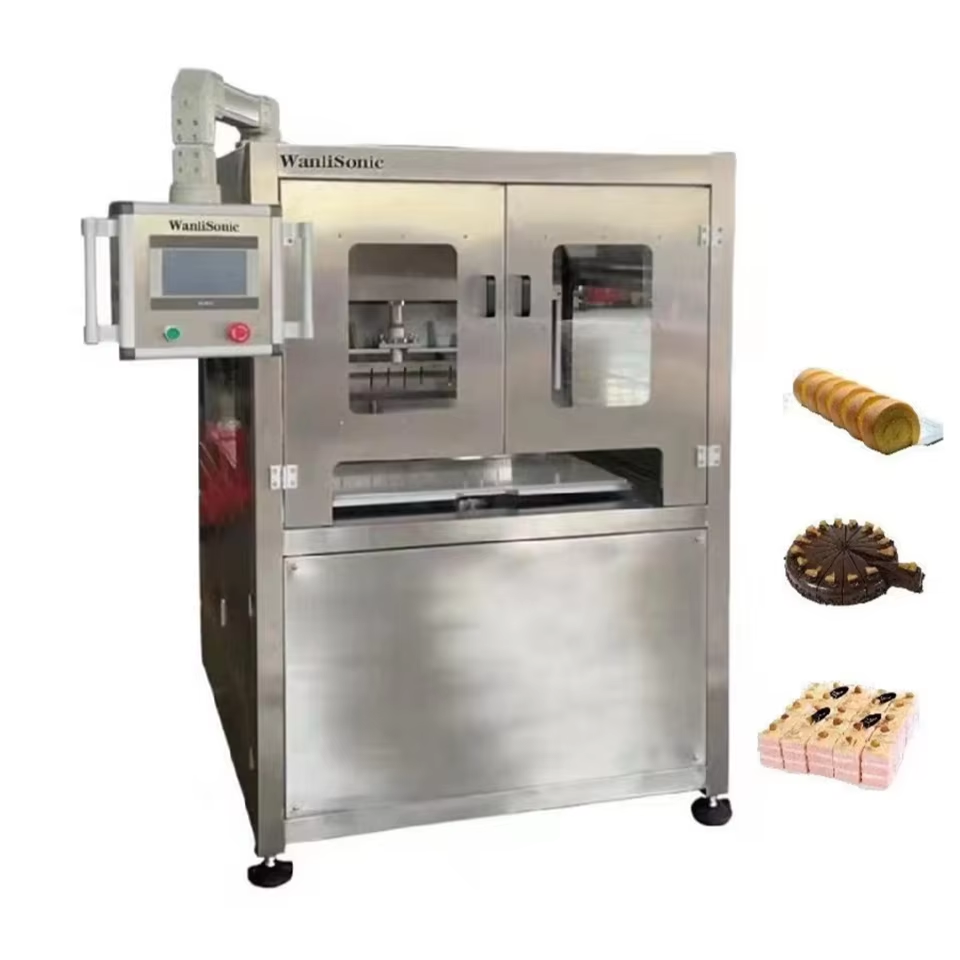
Modern customized ultrasonic food cutting machines feature sophisticated control systems that can be tailored to specific operational requirements. These systems allow operators to adjust cutting parameters such as frequency, amplitude, and cutting speed in real-time to optimize performance for different products. The user interface can be customized to display relevant information for specific production processes, simplifying operator training and reducing the likelihood of errors.
Advanced control systems also enable integration with existing production line management software, allowing for seamless data exchange and process monitoring. This connectivity facilitates quality control tracking, production scheduling optimization, and predictive maintenance planning, contributing to overall operational efficiency improvements.
Applications Across Different Food Categories
Bakery and Confectionery Products
The bakery industry represents one of the most significant beneficiaries of ultrasonic cutting technology. Delicate products such as layer cakes, cream-filled pastries, and chocolate confections require precise cutting without disturbing intricate decorations or fillings. A customized ultrasonic food cutting machine can be configured specifically for these applications, ensuring consistent portion sizes and maintaining product presentation quality.
The technology proves particularly valuable when processing products with multiple layers of different textures, such as tiramisu or multi-layer cakes with fruit fillings. Traditional cutting methods often compress these products, creating uneven layers and compromising visual appeal. Ultrasonic cutting maintains the distinct separation between layers while creating clean, professional-looking cuts that enhance product marketability.
Dairy and Cheese Processing
Cheese cutting presents unique challenges due to the varied textures and compositions across different cheese types. Soft cheeses tend to stick to conventional blades, while hard cheeses can crack or crumble under traditional cutting pressure. Ultrasonic cutting technology addresses both challenges effectively, providing clean cuts through soft varieties while preventing fracturing in harder cheeses.
The customization options for dairy processing include specialized blade geometries designed for specific cheese types and cutting patterns. Temperature control features can be integrated to maintain optimal cutting conditions for temperature-sensitive products. The reduced friction also minimizes heat generation, preserving cheese quality and extending shelf life.
Production Line Integration and Workflow Optimization
Seamless Equipment Integration
Successful implementation of ultrasonic cutting technology requires careful consideration of existing production line configurations. Customized systems can be designed to integrate seamlessly with conveyor systems, packaging equipment, and quality control stations. The modular design approach allows for easy installation without significant disruption to ongoing operations.
Integration planning also includes considerations for product handling before and after cutting. Custom feeding systems can be designed to present products at optimal angles and positions for cutting, while collection systems ensure gentle handling of cut products to prevent damage. These integrated solutions maximize the benefits of ultrasonic cutting technology while maintaining overall production efficiency.
Throughput and Capacity Planning
Capacity planning for ultrasonic cutting systems requires analysis of product types, cutting complexity, and desired throughput rates. Customized systems can be configured with multiple cutting stations to increase capacity or designed for rapid product changeover to accommodate diverse production schedules. The flexibility inherent in customized systems allows manufacturers to scale operations efficiently as demand patterns evolve.
Advanced planning also considers future expansion possibilities, ensuring that initial investments can be leveraged as production requirements grow. Modular system designs facilitate the addition of cutting stations or upgrade of control systems without replacing the entire installation.
Quality Control and Consistency Achievements
Precision and Repeatability Standards
Quality control in food processing demands consistent results across large production volumes. Ultrasonic cutting technology delivers exceptional repeatability, with cutting tolerances typically within ±0.5mm for most applications. This precision level enables manufacturers to meet strict packaging requirements and maintain consistent portion weights, reducing waste and improving profitability.
The technology also enables real-time monitoring of cutting parameters, allowing immediate detection and correction of any deviations from established standards. This capability significantly reduces the production of out-of-specification products and minimizes quality control rejections.
Product Integrity Preservation
Maintaining product integrity during cutting operations is crucial for both aesthetic appeal and structural stability. Ultrasonic cutting preserves product structure by eliminating the crushing forces associated with traditional cutting methods. This preservation is particularly important for products with delicate garnishes, fragile crusts, or temperature-sensitive components.
The minimal heat generation during ultrasonic cutting also prevents melting or softening of products containing chocolate, cream, or other heat-sensitive ingredients. This thermal stability ensures that products maintain their intended texture and appearance throughout the cutting process.
Economic Benefits and Return on Investment
Operational Cost Reductions
The implementation of customized ultrasonic food cutting technology delivers measurable economic benefits through multiple cost reduction mechanisms. Reduced product waste directly impacts material costs, while improved cutting precision enables optimal utilization of raw materials. The technology also reduces labor costs through automated operation and simplified maintenance procedures.
Energy consumption represents another area of cost savings, as ultrasonic systems typically require less power than traditional mechanical cutting equipment. The efficient energy transfer characteristic of ultrasonic technology translates to lower operational costs over the equipment's lifetime.
Revenue Enhancement Opportunities
Beyond cost reductions, ultrasonic cutting technology creates opportunities for revenue enhancement through improved product quality and expanded production capabilities. The superior cut quality enables premium pricing for high-end products, while the ability to process challenging products opens new market segments.
The technology also enables innovative product designs and presentations that can command higher market prices. The precision cutting capabilities allow for intricate product geometries and consistent portion sizing that enhance customer satisfaction and brand reputation.
Maintenance and Longevity Considerations
Preventive Maintenance Programs
Effective maintenance programs are essential for maximizing the lifespan and performance of ultrasonic cutting equipment. Customized systems can include integrated monitoring capabilities that track component wear and predict maintenance requirements. This predictive approach minimizes unexpected downtime and ensures consistent cutting performance.
Regular maintenance procedures focus on blade condition monitoring, transducer inspection, and control system calibration. The modular design of customized systems facilitates easy access to critical components, reducing maintenance time and complexity.
Component Replacement and Upgrades
The modular design philosophy extends to component replacement and system upgrades. Individual components can be replaced or upgraded without requiring complete system replacement, protecting the initial investment while allowing for technology advancement adoption. This approach ensures that systems remain current with evolving industry requirements and technological improvements.
Upgrade pathways can include enhanced control systems, improved blade designs, or additional automation features. The customization approach ensures that upgrades align with specific operational requirements and provide measurable benefits.
FAQ
What types of food products can be processed with ultrasonic cutting technology
Ultrasonic cutting technology is particularly effective for sticky, layered, delicate, or frozen food products including cakes, pastries, cheese, pizza, sandwiches, confectionery items, and protein products. The technology excels with products that traditional cutting methods struggle to process cleanly, such as cream-filled items, multi-layer products, and items with diverse textures within a single product.
How does customization affect the cost and delivery time of ultrasonic cutting equipment
Customization typically adds 2-4 weeks to standard delivery times, depending on the complexity of modifications required. While initial costs may be 15-25% higher than standard configurations, the improved efficiency, reduced waste, and enhanced product quality usually provide return on investment within 12-18 months. The long-term benefits of optimized performance often justify the additional customization investment.
What training is required for operators to use customized ultrasonic cutting machines effectively
Operator training typically requires 2-3 days of comprehensive instruction covering system operation, parameter adjustment, basic maintenance procedures, and troubleshooting. Customized systems often include simplified user interfaces designed for specific applications, reducing the learning curve. Ongoing support and advanced training programs are usually available to ensure optimal system utilization and performance maintenance.
How does ultrasonic cutting technology impact food safety and hygiene standards
Ultrasonic cutting technology enhances food safety through reduced product contact time, minimal heat generation, and easier cleaning procedures. The smooth cutting action reduces bacterial contamination risks compared to traditional cutting methods that can create rough surfaces. The equipment design typically incorporates sanitary construction principles with easy-to-clean surfaces and minimal crevices where contaminants could accumulate.
Table of Contents
- Understanding Ultrasonic Food Cutting Technology
- Customization Options for Diverse Production Requirements
- Applications Across Different Food Categories
- Production Line Integration and Workflow Optimization
- Quality Control and Consistency Achievements
- Economic Benefits and Return on Investment
- Maintenance and Longevity Considerations
-
FAQ
- What types of food products can be processed with ultrasonic cutting technology
- How does customization affect the cost and delivery time of ultrasonic cutting equipment
- What training is required for operators to use customized ultrasonic cutting machines effectively
- How does ultrasonic cutting technology impact food safety and hygiene standards