
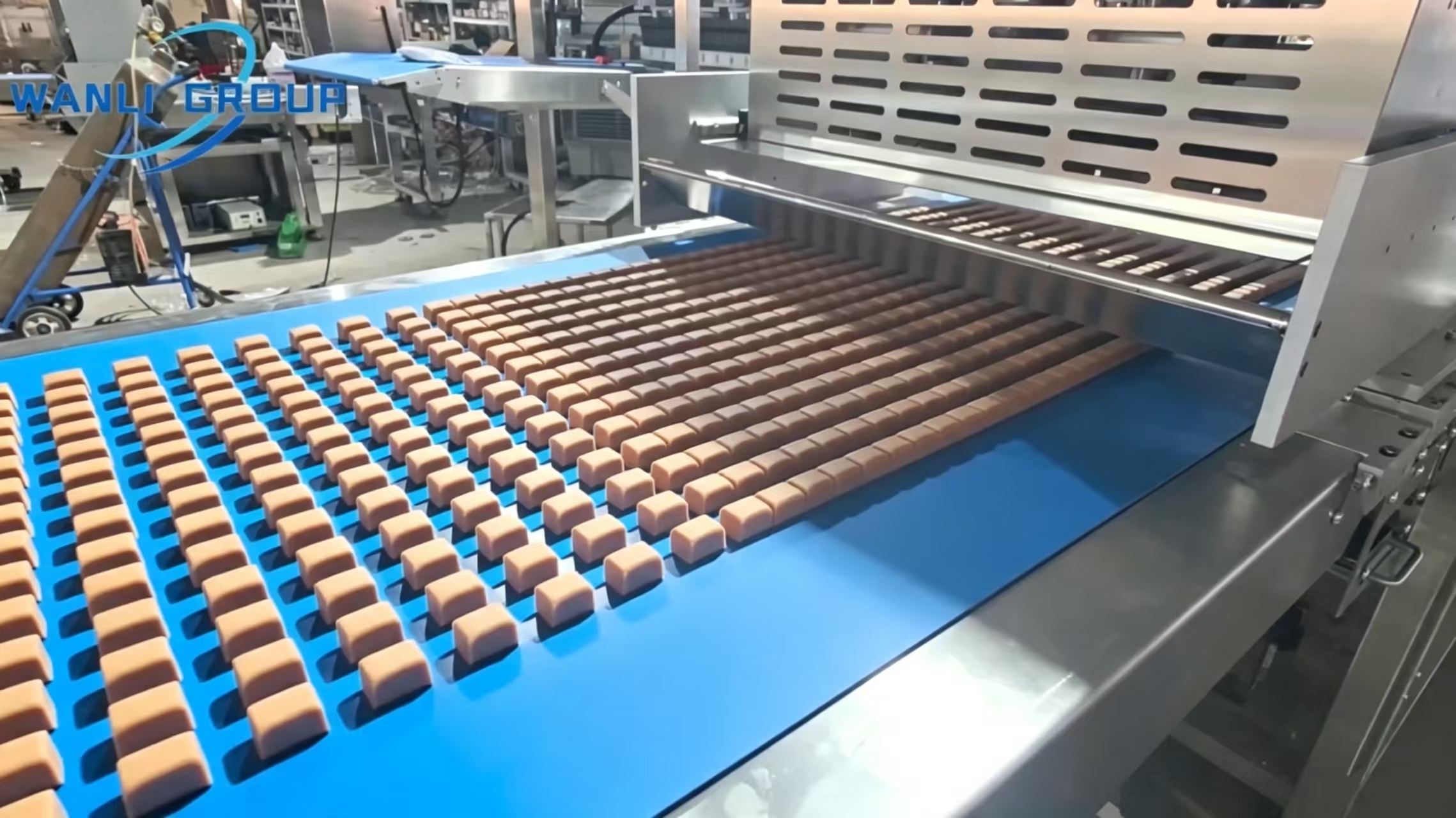
Ultrasonic Cutting Production Lines Revolutionize Raw Dough Processing in Bakeries
Bakeries and Pastry Manufacturers Adopt Ultrasonic Cutting Production Lines for Efficient Raw Dough Processing
In the modern bakery industry, the cutting process of raw dough plays a vital role in ensuring product consistency, production efficiency, and overall product quality. As consumer demand for standardized bakery products continues to grow, traditional manual and mechanical cutting methods are increasingly challenged by issues such as dough adhesion, uneven cutting surfaces, material waste, and limited production capacity. To overcome these challenges, ultrasonic cutting production lines have emerged as an advanced solution, helping bakeries and pastry manufacturers achieve more precise, efficient, and hygienic dough-cutting operations.
Ultrasonic cutting technology uses high-frequency vibration to separate food materials with minimal resistance. The system typically consists of an ultrasonic generator, transducer, booster, and ultrasonic cutting blade. The generator converts electrical energy into a high-frequency signal, usually between 20 kHz and 40 kHz. The transducer then transforms this signal into mechanical vibration, which is amplified and transferred to the cutting blade. As a result, the blade vibrates thousands of times per second, creating a rapid micro-cutting effect that allows it to smoothly penetrate raw dough without relying on excessive pressure.
Unlike conventional cutting methods, ultrasonic cutting production lines significantly reduce friction between the blade and dough. The high-frequency vibration allows the cutting blade to pass through dough materials with less resistance, preventing common problems such as tearing, deformation, uneven edges, and product damage. Whether processing soft dough, layered dough, filled dough, or complex bakery formulations, ultrasonic cutting technology ensures clean and accurate cutting results while maintaining the original structure of the product.
Improved Cutting Precision and Product Consistency
One of the biggest advantages of ultrasonic cutting production lines is their exceptional cutting accuracy. In traditional dough-cutting processes, variations often occur due to manual operation, blade pressure, and material characteristics. These inconsistencies can affect the appearance and baking performance of final products.
Ultrasonic cutting equipment provides stable and repeatable cutting performance. The vibrating blade creates smooth and precise cutting surfaces, ensuring that every dough portion maintains the same size and shape. This is particularly important for bakeries producing large quantities of bread, pastries, cookies, croissants, and other standardized products. By improving portion accuracy, manufacturers can maintain consistent product quality and enhance customer satisfaction.
Reduced Waste and Lower Production Costs
Material waste is a major concern in bakery production. Traditional blades often cause dough sticking, requiring frequent cleaning and resulting in product loss. The continuous high-frequency vibration of an ultrasonic cutter creates a self-cleaning effect, greatly reducing dough adhesion on the blade surface.
With less sticking and fewer interruptions for cleaning, bakeries can achieve higher material utilization rates and reduce production waste. At the same time, ultrasonic blades experience less mechanical wear compared with conventional cutting tools, extending service life and reducing maintenance costs. This makes ultrasonic cutting production lines a cost-effective investment for both small bakeries and large-scale food manufacturers.
Increased Automation and Production Efficiency
As bakery production moves toward automation, ultrasonic cutting production lines provide flexible and scalable solutions for modern manufacturing facilities. These systems can be integrated with conveyor lines, robotic systems, and automated production equipment to achieve continuous dough feeding, positioning, cutting, and product handling.
Through intelligent control systems, operators can easily adjust cutting parameters according to different product specifications. The same machine can perform straight cuts, wave cuts, serrated cuts, and customized shapes by changing program settings. This flexibility allows bakeries to quickly respond to changing market demands and efficiently handle high-volume production requirements.
For commercial bakeries producing thousands of bakery items daily, ultrasonic cutting technology offers a significant improvement in production speed while reducing dependence on manual labor.
Enhanced Hygiene and Food Safety Standards
Food safety is a top priority in bakery production. Ultrasonic cutting production lines help manufacturers maintain higher hygiene standards through reduced manual contact and improved equipment cleanliness.
Because ultrasonic cutting requires less pressure and creates less residue buildup, the production area remains cleaner and easier to maintain. Automated cutting processes also reduce direct contact between workers and raw dough, minimizing the risk of contamination. In addition, many ultrasonic cutting systems are designed with food-grade materials and easy-to-clean structures, supporting compliance with strict food processing regulations.
Optimized Operation and Maintenance for Better Performance
To achieve the best cutting results, bakeries should optimize ultrasonic cutting parameters according to different dough characteristics. Factors such as dough thickness, hardness, moisture content, and product structure should be considered when adjusting frequency, amplitude, and cutting speed.
For softer and thinner dough materials, a higher frequency setting combined with moderate amplitude can provide smooth and efficient cutting. For thicker or denser dough, increasing amplitude and adjusting cutting speed can help achieve complete separation.
Regular inspection and maintenance of key components, including ultrasonic blades, transducers, and generators, are also essential. Keeping the equipment clean, checking component connections, and avoiding strong electromagnetic interference can help ensure long-term stable operation.
Wanlisonic Ultrasonic Cutting Solutions Support Modern Bakery Production
With advantages including precision cutting, reduced waste, high efficiency, automation capability, and improved hygiene, ultrasonic cutting production lines are transforming the way bakeries process raw dough. The technology not only addresses the limitations of traditional cutting methods but also helps bakery companies achieve standardized and large-scale production.
As the global bakery industry continues to develop, ultrasonic cutting technology will become an increasingly important tool for manufacturers seeking higher productivity, better product quality, and smarter production solutions.
Wanlisonic provides advanced ultrasonic cutting equipment designed for bakery and food processing applications. From small bakery operations to high-volume industrial production lines, Wanlisonic offers reliable cutting solutions for dough, cakes, pastries, bread, cheese, pizza, sandwiches, and other food products.
Frequently Asked Questions (FAQ)
Q1: What types of dough can be cut by Wanlisonic ultrasonic cutting machines?
Wanlisonic ultrasonic cutting systems can process a wide range of bakery materials, including raw dough, frozen dough, layered dough, filled dough, pastry dough, bread dough, and other soft or sticky food products.
Q2: Why is ultrasonic cutting better than traditional dough cutting?
Ultrasonic cutting reduces friction between the blade and dough, preventing sticking, tearing, and deformation. It provides cleaner edges, higher accuracy, less waste, and faster production compared with traditional cutting methods.
Q3: Can ultrasonic cutting machines be integrated into automated bakery production lines?
Yes. Wanlisonic ultrasonic cutting production lines can be integrated with conveyors, robotic systems, and automated production equipment to support continuous high-speed manufacturing.
Q4: Does ultrasonic cutting reduce food waste?
Yes. The low-resistance cutting process minimizes dough sticking and product loss, helping bakeries improve material utilization and reduce production costs.
Q5: How should ultrasonic cutting parameters be adjusted for different dough products?
Frequency, amplitude, and cutting speed should be adjusted according to dough thickness, hardness, and texture. Wanlisonic provides professional technical support to help customers optimize machine performance.
Contact Information
Ruby Hong (Senior Customer Consultant)
Email: [email protected]
Tel / WhatsApp / WeChat: +86 15790657897
Table of Contents
- Ultrasonic Cutting Production Lines Revolutionize Raw Dough Processing in Bakeries
- Bakeries and Pastry Manufacturers Adopt Ultrasonic Cutting Production Lines for Efficient Raw Dough Processing
- Improved Cutting Precision and Product Consistency
- Reduced Waste and Lower Production Costs
- Increased Automation and Production Efficiency
- Enhanced Hygiene and Food Safety Standards
- Optimized Operation and Maintenance for Better Performance
- Wanlisonic Ultrasonic Cutting Solutions Support Modern Bakery Production
-
Frequently Asked Questions (FAQ)
- Q1: What types of dough can be cut by Wanlisonic ultrasonic cutting machines?
- Q2: Why is ultrasonic cutting better than traditional dough cutting?
- Q3: Can ultrasonic cutting machines be integrated into automated bakery production lines?
- Q4: Does ultrasonic cutting reduce food waste?
- Q5: How should ultrasonic cutting parameters be adjusted for different dough products?
- Contact Information