
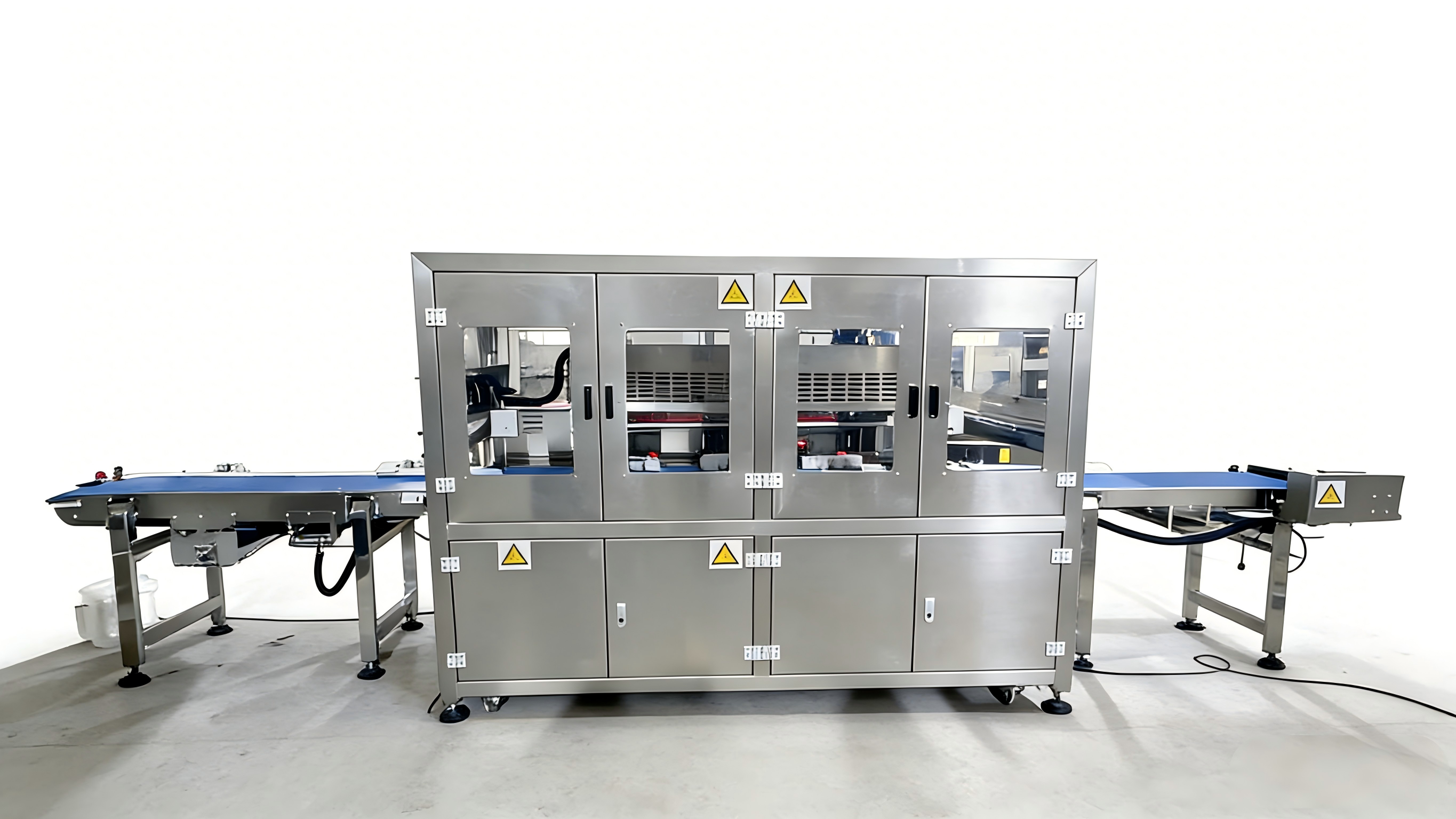
In today’s competitive bakery and frozen dessert industry, efficiency and consistency are more important than ever. Round frozen cakes are widely used for retail, food service, and large-scale distribution due to their long shelf life and convenience. However, one key challenge remains: how to precisely cut round frozen cakes into uniform portions while seamlessly integrating the process into a high-speed production line.
Traditional cutting methods often fail to meet the demands of modern automation. To solve this problem, bakeries are increasingly turning to advanced technologies such as ultrasonic cutting systems combined with intelligent production line integration.
Challenges in Cutting Round Frozen Cakes
Frozen cakes present unique cutting difficulties compared to fresh products. Their firm texture can make them easier to handle, but also more prone to damage if not cut correctly.
One of the main issues is cracking and structural damage. When standard blades apply pressure to frozen cakes, the rigid layers may fracture, especially in products with cream, mousse, or multiple fillings.
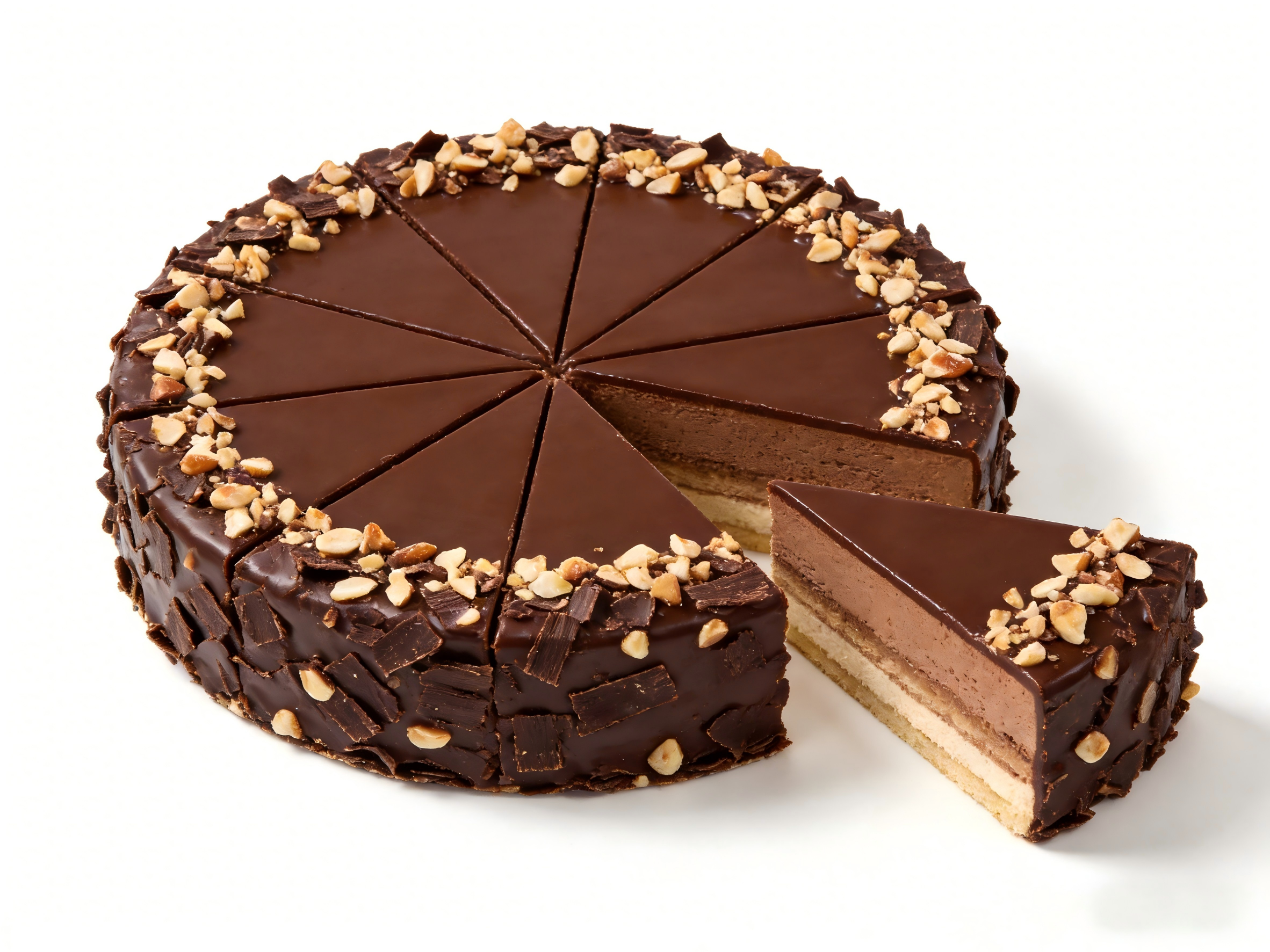
Another challenge is achieving consistent portion sizes. Round cakes must often be divided into equal slices, and even small inaccuracies can result in uneven weights and inconsistent product presentation.
In addition, bakeries face efficiency limitations when using manual or semi-automatic cutting methods. These approaches are not suitable for high-volume production environments where speed and precision must go hand in hand.
Finally, integrating cutting into a continuous workflow is difficult without the right equipment. Disconnected processes can slow down production and increase labor costs.
The Importance of Production Line Integration
In modern bakery operations, cutting is no longer a standalone process. It must be part of a fully integrated production line that includes:
Cake feeding and alignment
Cutting and portioning
Product transfer and sorting
Packaging and sealing
A well-designed production line ensures smooth transitions between each stage, reducing downtime and improving overall efficiency.
For round frozen cakes, integration is particularly important because it ensures that each cake is positioned correctly before cutting and that slices are handled carefully afterward.
Ultrasonic Cutting Technology: A Key Solution
Ultrasonic cutting technology has become a core solution for precise cake cutting in automated production lines. By using high-frequency vibrations, ultrasonic blades reduce friction and allow smooth cutting through frozen products.
Unlike traditional blades, ultrasonic knives do not rely on pressure alone. Instead, they create a rapid vibration that enables the blade to glide through the cake with minimal resistance.
Benefits for Production Line Applications
When applied to round frozen cakes within a production line, ultrasonic cutting offers several advantages:
Clean and precise slices without cracking
Uniform portion sizes for consistent packaging
Reduced product waste due to minimal damage
Non-stick performance, even with cream or frosting layers
High-speed operation suitable for continuous production
These benefits make ultrasonic cutting ideal for automated bakery environments.
How Integrated Cutting Systems Work
In a fully automated production line, round frozen cakes are first transported via conveyor systems to the cutting station. Positioning devices ensure that each cake is aligned correctly before cutting begins.
The ultrasonic cutting system then divides the cake into pre-programmed portions, such as equal triangular slices. Advanced control systems allow operators to adjust parameters like cutting speed, blade amplitude, and portion size.
After cutting, the slices are transferred smoothly to the next stage, which may include sorting, tray loading, or packaging. This seamless process ensures high efficiency and minimal manual intervention.
Enhancing Efficiency and Product Quality
By integrating ultrasonic cutting into a production line, bakeries can achieve both high efficiency and superior product quality.
Automation reduces the need for manual handling, lowering labor costs and minimizing the risk of human error. At the same time, precise cutting ensures that every slice meets the same quality standards.
This is especially important for businesses supplying supermarkets, restaurants, or export markets, where consistency and presentation are critical.
Flexibility for Different Production Needs
Modern cutting systems are designed to be flexible and adaptable. They can handle different cake sizes, heights, and recipes, making them suitable for a wide range of products.
Whether producing small retail cakes or large frozen desserts for wholesale distribution, bakeries can adjust the system to meet their specific requirements.
In addition, modular designs allow manufacturers to upgrade or expand their production lines as their business grows.
The Future of Automated Cake Cutting
As the bakery industry continues to evolve, the demand for automation and precision will only increase. Integrated ultrasonic cutting systems represent the future of cake processing, combining advanced technology with practical efficiency.
By adopting these solutions, bakeries can stay competitive, improve productivity, and deliver high-quality products to their customers.